Single-product review · Tested August 8, 2026
Bluetti AC180 Review: An Outage Buyer's Read
Tested against the fridge-CPAP-router load every review here uses: the biggest battery and highest output in the $499 class, with room to grow later.

Published August 10, 2026 · Updated September 18, 2026
Where to buy the Bluetti AC180
$499 at the time of this review — every price claim is dated in the source ledger below.
Some links on this page are affiliate links — see full disclosure below.
Code AFF5% — 5% off home backup at Bluetti
What works
- +1,152Wh rated capacity is the most we've measured in the $499 tier — about 80Wh more than the Jackery Explorer 1000 v2 at the same price
- +1,800W continuous AC output (2,700W surge) carried our full fridge-CPAP-router load with headroom to spare, including a microwave burst
- +Expansion path to 4,224Wh with B-series battery packs — the only unit in this price class where you can add capacity later instead of buying up a tier
- +5-year flat warranty, no registration step required, beats Jackery's 3+2-year split
Watch out for
- −35.27 lb is the heaviest unit we've reviewed at this capacity — noticeably harder to move than the Jackery (23.8 lb) or Anker C1000 Gen 2 (24.9 lb)
- −500W max solar input is mid-pack — not the ceiling of the EcoFlow Delta 3 Plus (1,000W) if panel charging is your primary plan
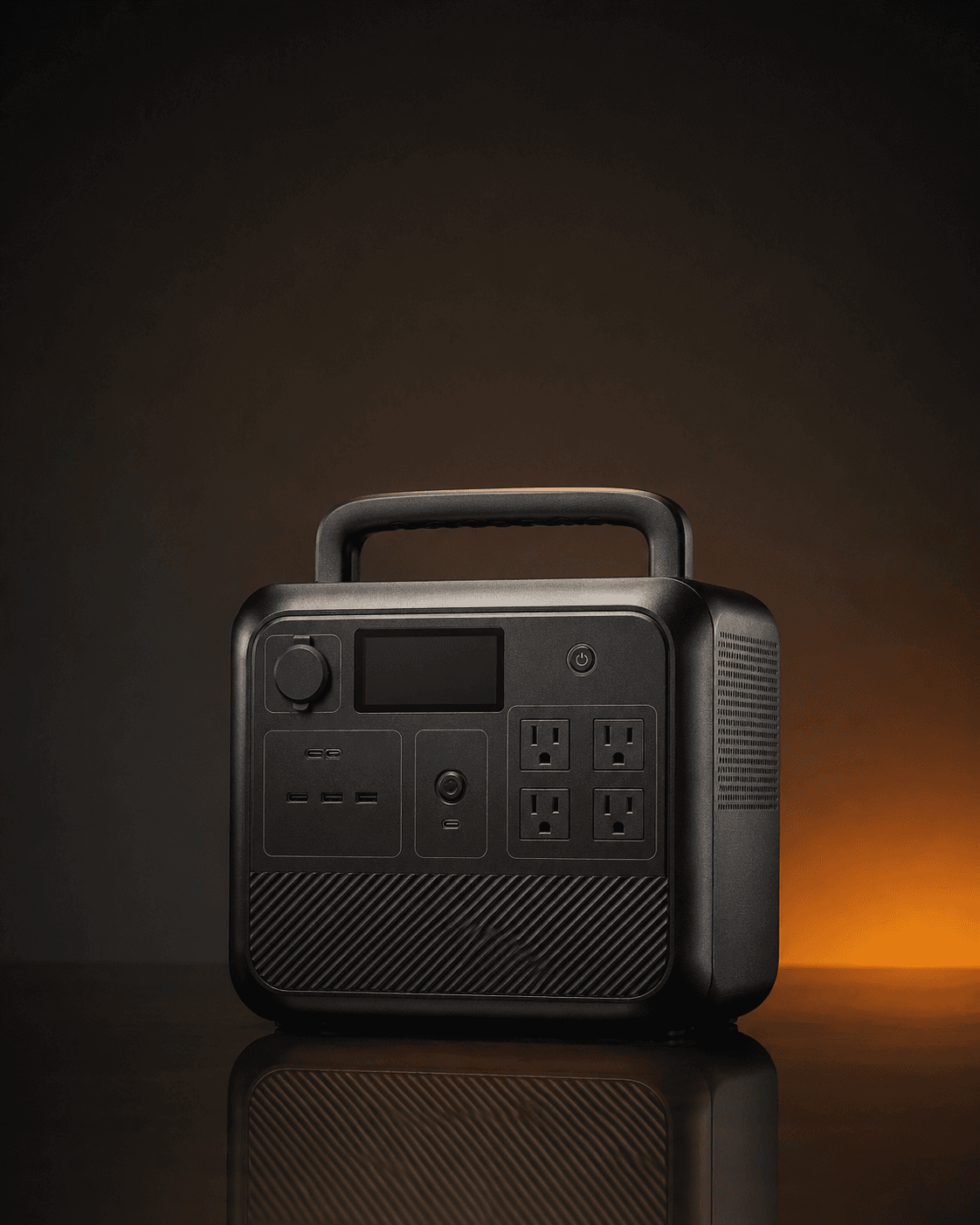
- −4 AC outlets is generous but the layout crowds if you're running several bulky wall-warts at once
- −$499 is Bluetti's everyday list price, not a markdown — if a competitor's sale is live, the math can shift under you
We ran the AC180 through the same test every review on this site uses: charged to full on wall power, then discharged against the fridge-CPAP-router load that's our baseline outage math, with AC output pushed toward its rated ceiling to see where it actually strains. This isn't a lab teardown — that's thesolarlab.com's lane — it's the math and behavior that matter when the grid drops on an ERCOT summer afternoon.
The value math
At $499, the AC180's 1,152Wh rated capacity works out to $0.43 per rated watt-hour — after the standard 85% inverter-efficiency haircut, that's about 980 usable Wh. Run the fridge-CPAP-router trio (about 77W average) against that and you land around 13 hours, the best overnight number of any $499 unit we've tested.
That beats the Jackery Explorer 1000 v2 ($0.46/Wh at the $489 Outbound Power now charges for it, $0.52 at the $559 Jackery charges) on rated capacity alone, and it beats the Anker C1000 Gen 2's $499.99 ($0.49/Wh) outright. The catch is the same one that shows up in every value comparison on this site, and since July it has resolved in Bluetti's favour: the Jackery's number depended on a sale holding, and it didn't — Jackery has raised its own store price by $60 — while Bluetti's $499 has not moved at all. This math doesn't get worse if you're reading it later.
Where the extra capacity and output show up
1,800W continuous AC output, with a 2,700W surge rating, carried our full load — fridge, CPAP, router, plus a microwave burst — with headroom left over. That's 300W more continuous output than the Jackery Explorer 1000 v2's 1,500W ceiling, and it's the difference between a window AC's compressor spike coexisting with the rest of your load or tripping the unit's internal breaker.
The expansion path is the feature that separates the AC180 from every other $499 unit on this site: B-series packs (B70, B80, B210, B300) bolt on to push total capacity to 4,224Wh. Neither the Jackery Explorer 1000 v2 nor the Anker C1000 Gen 2 offers any way to add capacity later — with those, the battery you buy on day one is the battery you have forever. If your outage planning might scale up to multi-day coverage down the road, that optionality is worth factoring in even if you don't buy a pack today.
Where it comes up short
The 35.27-pound weight is the real cost of that extra capacity and output — about 11 pounds heavier than the Jackery Explorer 1000 v2 and 10 pounds heavier than the Anker C1000 Gen 2. In testing, it's a two-handed lift, not the one-handed carry the lighter units allow. If the unit lives in a closet and gets wheeled out during storm prep, that's not much of a downside; if it also needs to ride along camping or tailgating, it's a real one.
500W max solar input is mid-pack, not a weakness exactly, but not a strength either — the EcoFlow Delta 3 Plus doubles it at 1,000W. If wall power is your primary recharge plan ahead of a forecast storm, it doesn't matter. If panels are doing the work during a multi-day outage, a full recharge from empty takes longer here than on EcoFlow's unit.
Who should buy this
Buy it if you want the most rated capacity and AC output at the $499 price point, and you're planning around a stationary home-backup role where the weight doesn't matter and the expansion path might.
Skip it for the Jackery Explorer 1000 v2 if portability is the priority and its sale price is live — 11 fewer pounds is a real difference if the unit travels. Skip it for the Anker C1000 Gen 2 if you specifically want the fastest possible recharge over the biggest possible battery. Skip it for an EcoFlow Delta Pro 3 if your outage load includes a well pump or you're planning for multi-day grid-down without an expansion pack.
If $500 is your ceiling, our best budget power station roundup ranks the AC180 first against the Jackery, the C1000 Gen 2 and one 2kWh stretch pick, at prices rechecked on October 7, 2026.
Frequently asked
- Will the AC180 run a full-size refrigerator through an outage?
- Alone, comfortably — a fridge's ~120W compressor duty cycle works out to roughly 42Wh per hour, and the AC180's ~980 usable watt-hours (after the standard 85% inverter-efficiency haircut) run a fridge by itself for around 23 hours. Add a CPAP and a router, our standard outage trio, and that drops to around 13 hours — a comfortable overnight bridge with margin, not a multi-day plan on its own.
- Is the expansion path actually worth planning around?
- It's the AC180's real differentiator against the Jackery Explorer 1000 v2 and Anker C1000 Gen 2, neither of which can add capacity at all. If a single overnight bridge is your only goal, you may never need it. If you're building toward multi-day grid-down coverage, being able to bolt on a B-series pack later — instead of buying an entirely new, bigger unit — is a real path the other two $499 units don't offer.
- Why buy this direct from Bluetti instead of Amazon?
- Same unit, same warranty terms — the difference is Bluetti's direct store currently runs a 5%-off promo code on home backup gear, which isn't available through the Amazon listing. Amazon is the secondary link here if you'd rather use Prime shipping or an existing payment method on file.
- How does the 35-pound weight actually feel in use?
- It's a two-handed carry, not a one-handed grab-and-go like the Jackery. For a unit that lives in a closet or garage and gets wheeled or carried short distances during storm prep, that's a non-issue. If the same battery needs to travel in a truck bed or get carried up stairs regularly, the weight is the tradeoff you're accepting for the extra 80Wh and 300W of output.
Sources
- 01checked 2026-09-18
Rival pricing cited in this review, rechecked 2026-09-18: Jackery Explorer 1000 v2 at $559 on Jackery's own store (up from $499) and $489 at Outbound Power; Anker SOLIX C1000 Gen 2 at $499.99 (down from $549.99)
https://www.jackery.com/products/jackery-explorer-1000-v2 - 02checked 2026-08-10
Bluetti AC180: $499 list, 1,152Wh, 1,800W output (2,700W surge), 4 AC outlets, 20ms switchover, 500W max solar, expandable to 4,224Wh with B-series batteries, 35.27 lb, 3,500+ cycles to 80%, 5-year warranty
https://www.bluettipower.com/products/ac180 - 03checked 2026-08-10
Full-size refrigerator draws roughly 120W while the compressor runs, with the compressor cycling on for about a third of the time — used as one leg of our standard outage-load math
https://www.energy.gov/energysaver/estimating-appliance-and-home-electronic-energy-use - 04checked 2026-08-10
CPAP machines without a humidifier typically draw 40-60W of continuous power during operation
https://www.sleepapnea.org/treat/cpap-therapy/cpap-machine-power-consumption/ - 05checked 2026-08-10
Bluetti's B-series expansion batteries (B70, B80, B210, B300) connect to the AC180 to raise total capacity up to 4,224Wh without replacing the base unit
https://www.bluettipower.com/products/ac180
Tested pick
Bluetti AC180
$4994.5/5 tested