Roundup · Home backup power
Best Power Station for Home Backup: 7 Ranked by Real Math
Seven power stations ranked for home backup by usable watt-hours per dollar — with the fridge-CPAP-router runtime math shown for every pick.

Published July 21, 2026 · Updated October 7, 2026
- Editor's Choice1
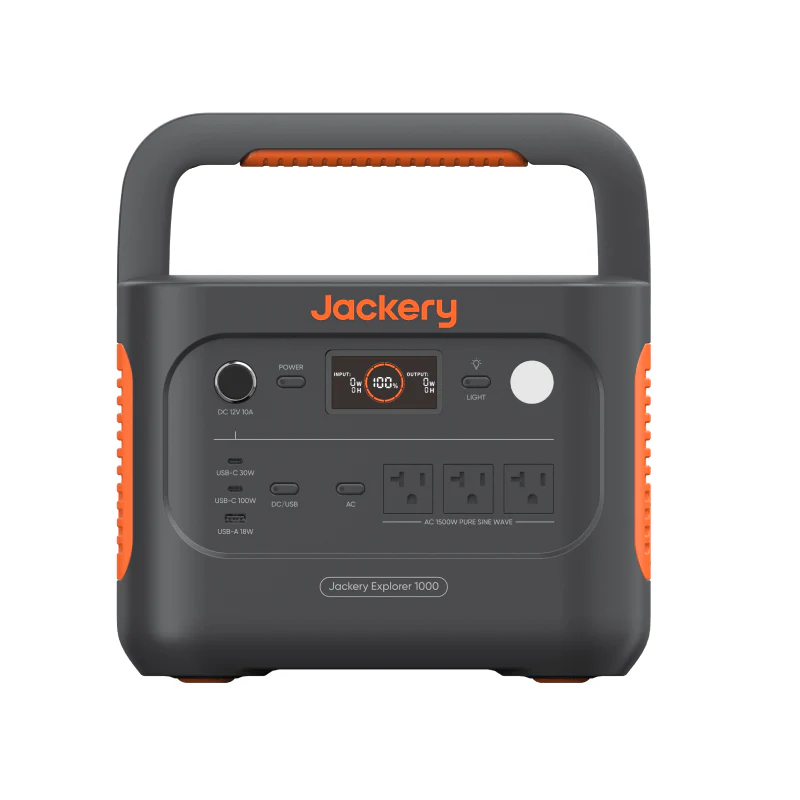
The best first backup battery, now only through a retailer. $489 at Outbound Power gets you 1,070Wh (≈910Wh usable) in the lightest box here (23.8 lb) — about 12 hours of fridge + CPAP + router. Jackery's own store has raised it to $559, which is $60 more for the same unit and the reason the primary link here is no longer Jackery's.
- 2
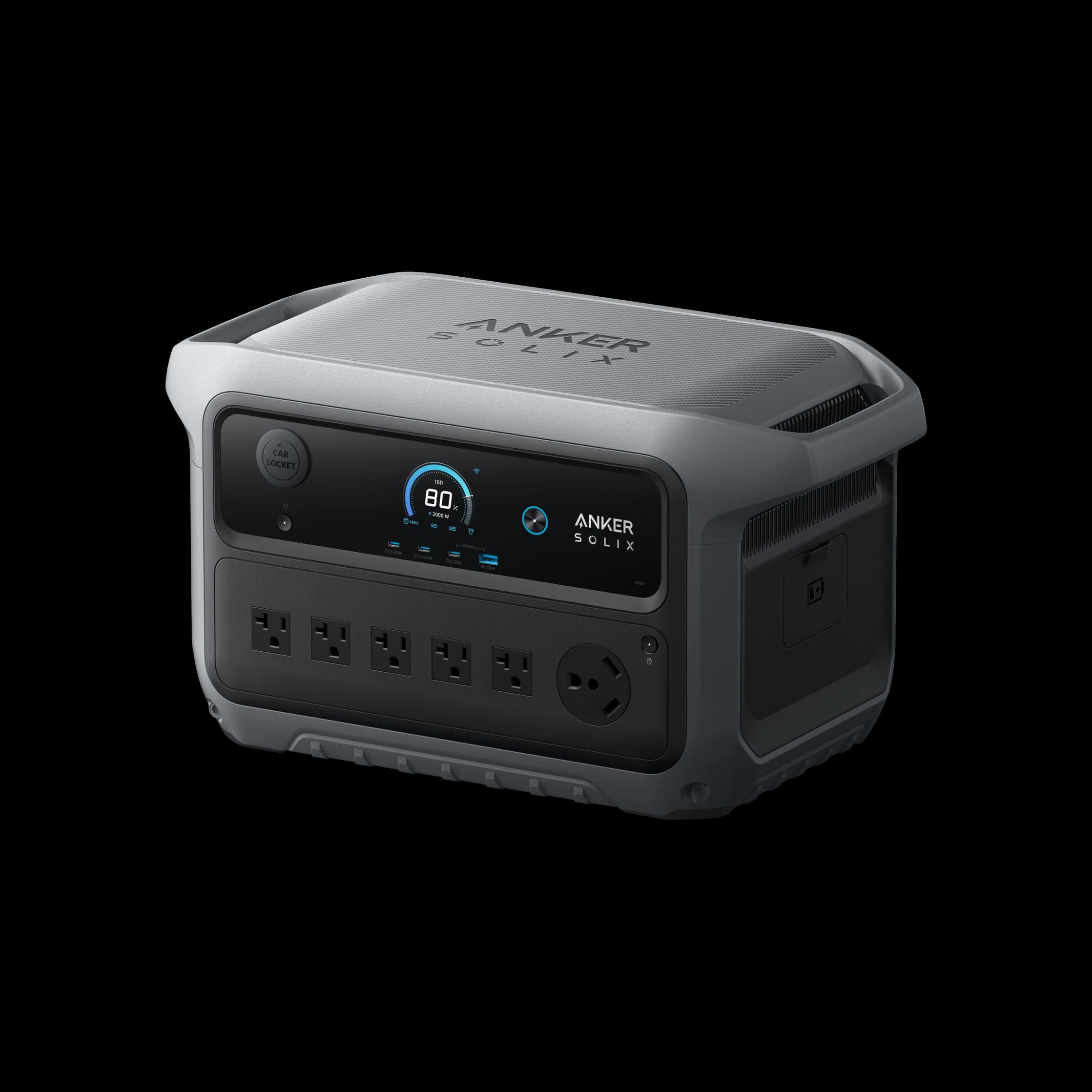
The 2kWh pick, and the one that can still grow. $899.99 buys 2,048Wh ($0.44/Wh) and 2,400W with a genuine 10ms UPS, and a BP2000 pack doubles it to 4kWh later. That's the expansion path the Elite 200 v2 structurally does not have, and since October it's also $299 cheaper than the Elite. Also the only unit here with a TT-30 RV socket.
- 3
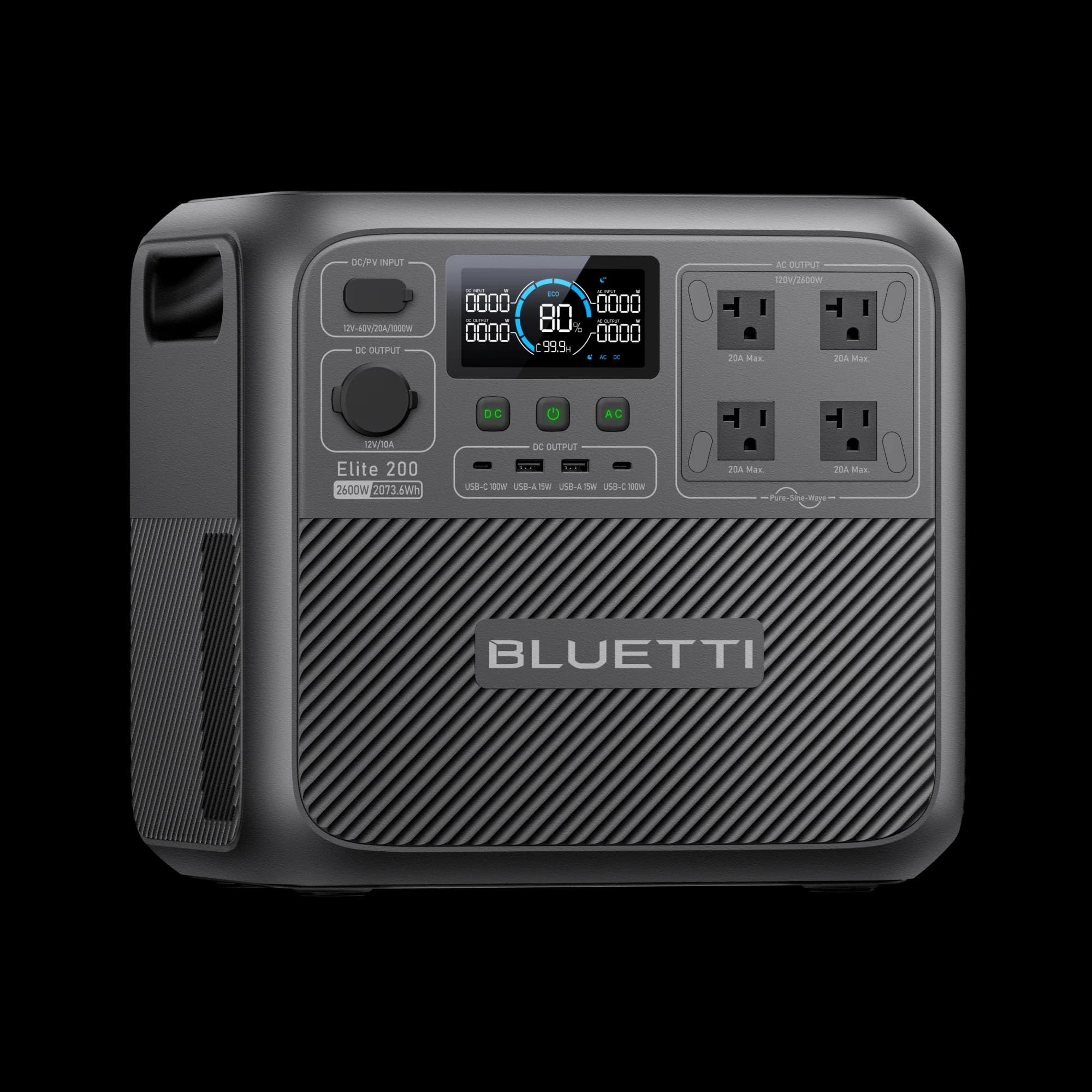
The better battery at the wrong price. A 6,000-cycle LiFePO4 pack, double everyone else's rated lifespan, with 2,073.6Wh and 2,600W of output: roughly 23 hours of the fridge-CPAP-router load. It was #2 here at $849. Bluetti has since ended that promotion and it's $1,199 again ($0.58/Wh), $299 more than the expandable Anker above. Amazon had it at $798.99 on October 7. Under about $900 it's the better buy, and it can never be expanded.
Check price at BluettiCode AFF5% — 5% off home backup at BluettiAmazon - 4
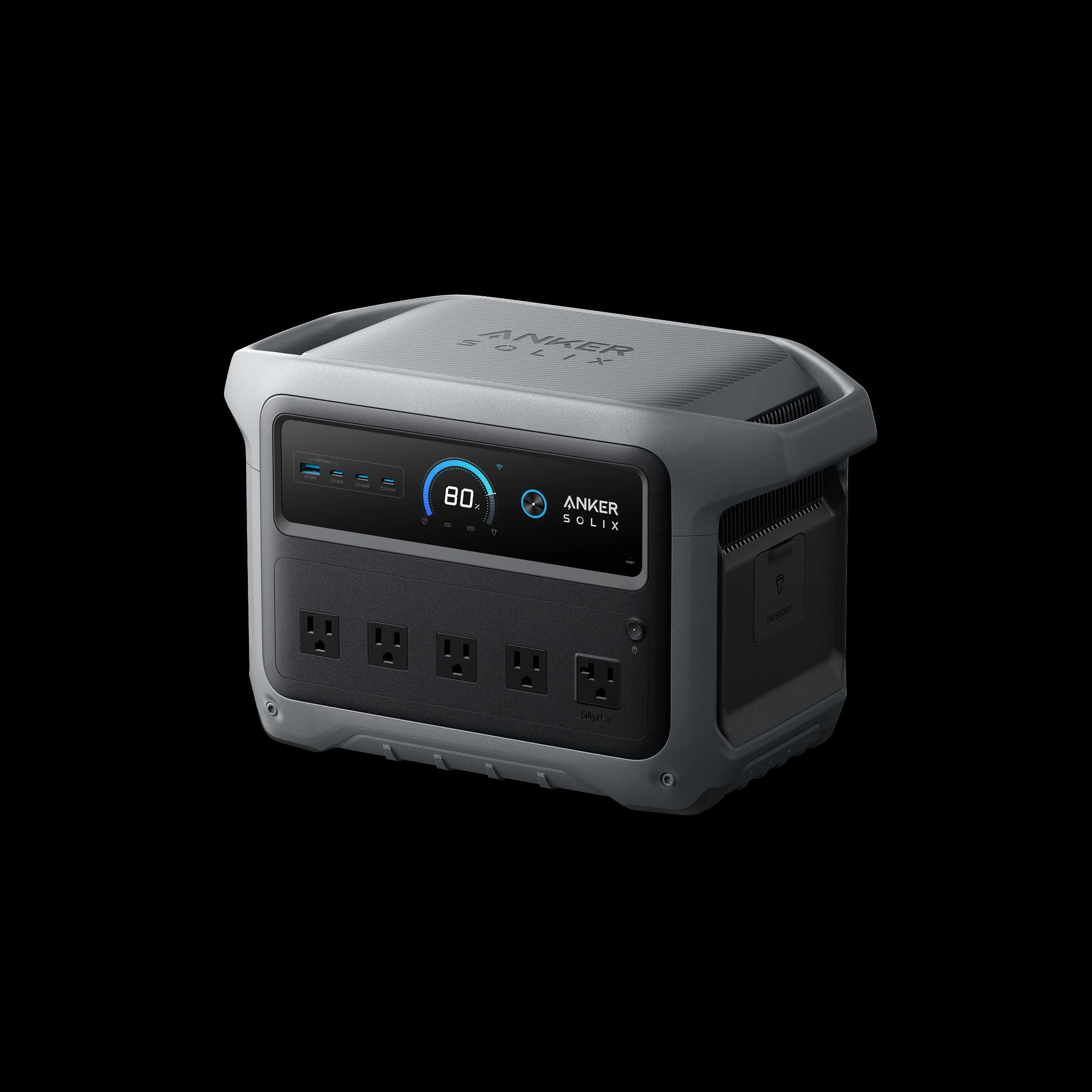
The most AC output per dollar in the 1kWh class, and $50 cheaper than in July: 2,000W continuous from a $499.99 box that recharges in 49 minutes. No expansion port and only 600W of solar input — this is the grab-and-go pick, not the build-on-it pick.
- 5
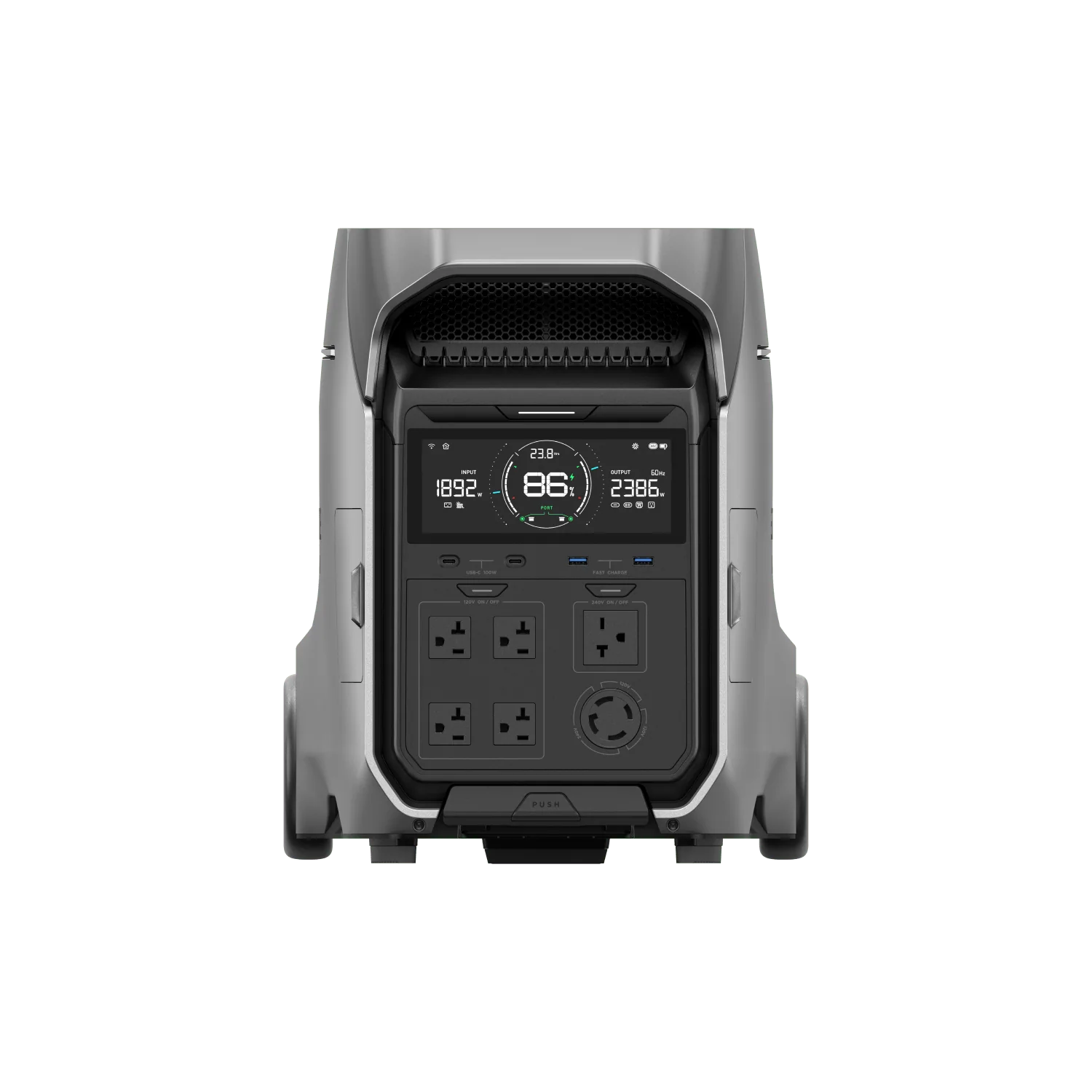
The whole-house tier: 4,096Wh, 4,000W, and real 120/240V output for a well pump or mini-split — about 45 hours of the fridge-CPAP-router trio. $2,799 after an August price rise; past this point you're shopping transfer switches, not power stations.
- 6
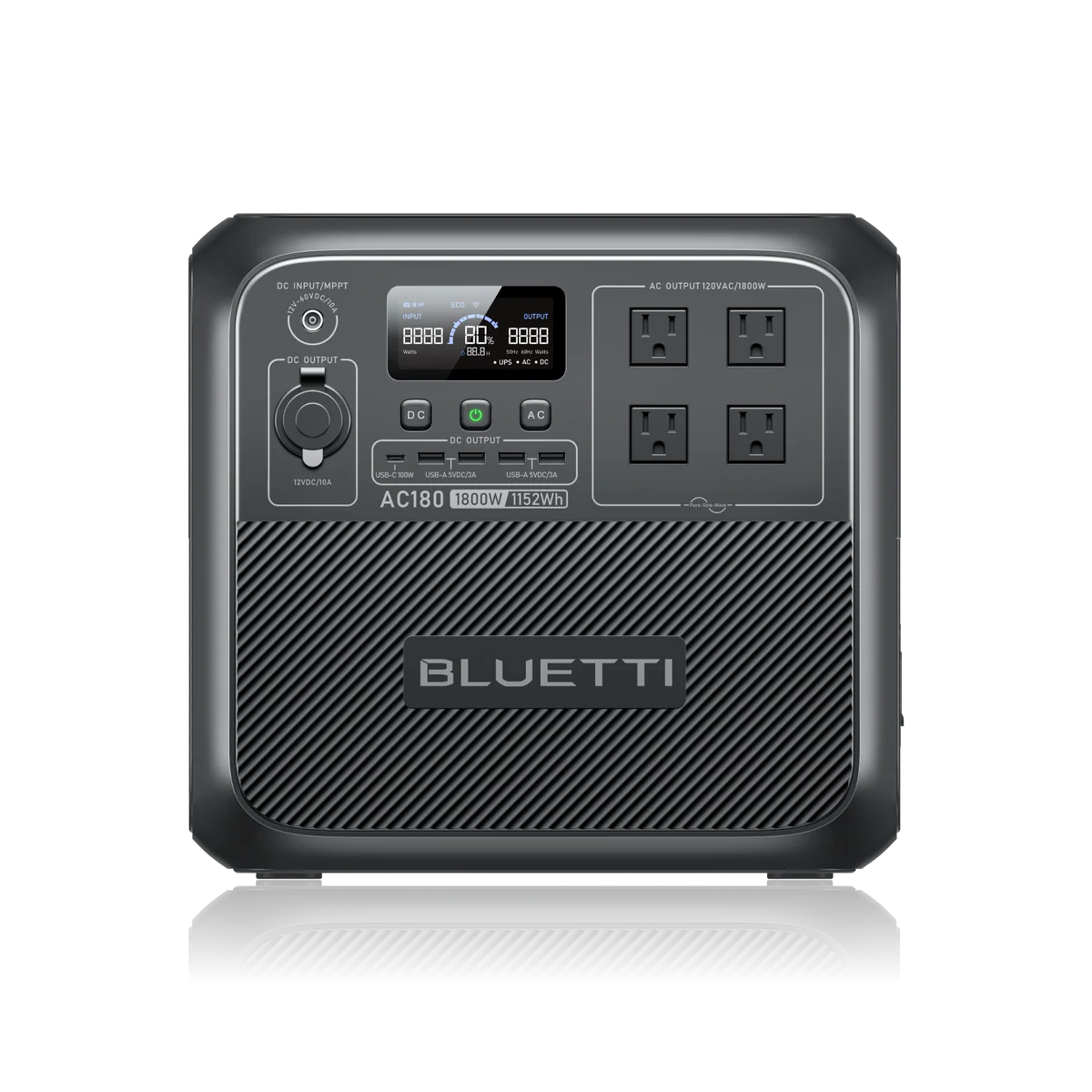
The budget capacity play: $499 buys 1,152Wh — the most watt-hours per dollar under $500 — and 1,800W of output, at a price that is Bluetti's everyday number rather than a promotion. It concedes weight (35.3 lb) and cycle life (3,500 to 80%) to the Jackery for ten dollars more.
Check price at BluettiCode AFF5% — 5% off home backup at BluettiAmazon - 7
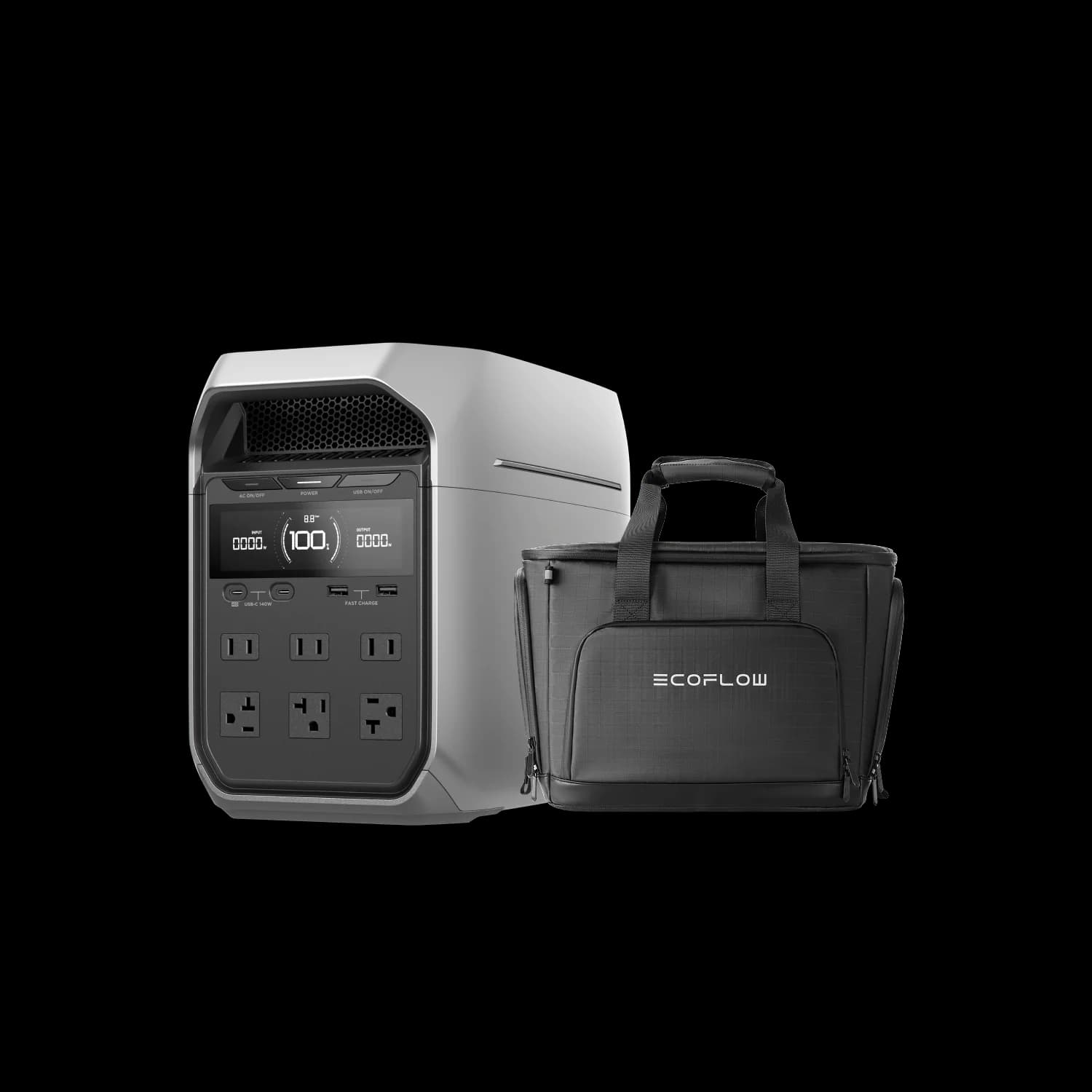
The best-engineered box here and the worst one to buy this month: EcoFlow's own store now lists the base unit as a pre-order shipping in November, and at $719 for 1,024Wh it already had the weakest $/Wh on this page. Genuinely excellent as a desk UPS — six outlets, sub-10ms switchover, a 56-minute recharge — if you can wait out hurricane season for it.
Every ranking on this page comes from three numbers: what a unit costs today at the cheapest place that actually stocks it, how many of its watt-hours you can actually use, and how long that keeps a real outage load alive. No lab, no vibes — the receipts are in the source ledger at the bottom, every price rechecked on September 18, 2026.
That recheck moved this page more than any since launch. Four of the seven prices changed, one pick left the list entirely, and one dropped four places for a reason that has nothing to do with how good it is. The short version: Jackery discontinued the Explorer 2000 Plus, so it is gone and the Anker SOLIX C2000 Gen 2 has its slot; EcoFlow's Delta 3 Plus is now a November pre-order, so it falls to seventh; the Bluetti Elite 200 v2 got $50 cheaper and the Anker C1000 Gen 2 $50 cheaper, while the Jackery Explorer 1000 v2 got $60 more expensive on Jackery's own store.
October 7 update: Bluetti ended the Elite 200 v2's $849 promotion. At $1,199 it drops from second to third, behind the Anker SOLIX C2000 Gen 2, which holds the same capacity for $299 less. If your ceiling is about $500, our best budget power station roundup re-ranks the 1kWh units at October prices.
The ranked math, in one table
The load we size against is the one Texans actually run during an outage: a full-size refrigerator (120W, compressor duty ~35%), a CPAP without its humidifier (60W, ~1/3 of the day), and a router + modem (15W, always on). That averages about 77W. "Usable Wh" applies an 85% inverter-efficiency haircut to the rated capacity — spec sheets quote the battery, you live off the inverter.
| Unit | Price today | Rated / usable Wh | $ / rated Wh | AC output | Fridge+CPAP+router |
|---|---|---|---|---|---|
| Jackery Explorer 1000 v2 | $489 (Jackery: $559) | 1,070 / ~910 | $0.46 | 1,500W | ~12 h |
| Anker SOLIX C2000 Gen 2 | $899.99 (list $999.99) | 2,048 / ~1,740 | $0.44 | 2,400W | ~23 h |
| Bluetti Elite 200 v2 | $1,199 (Amazon Oct 7: $798.99) | 2,073.6 / ~1,760 | $0.58 | 2,600W | ~23 h |
| Anker SOLIX C1000 Gen 2 | $499.99 (list $529.99) | 1,024 / ~870 | $0.49 | 2,000W | ~11 h |
| EcoFlow Delta Pro 3 | $2,799 (list $3,699) | 4,096 / ~3,480 | $0.68 | 4,000W (240V) | ~45 h |
| Bluetti AC180 | $499 | 1,152 / ~980 | $0.43 | 1,800W | ~13 h |
| EcoFlow Delta 3 Plus | $719 — pre-order | 1,024 / ~870 | $0.70 | 1,800W | ~11 h |
Runtime figures are computed from manufacturer capacity specs and typical appliance draws — they are estimates, deliberately conservative, and the formula is on our methodology page so you can rerun any of them yourself.
Power station or solar generator? Same box.
If you've been searching both terms: a solar generator is a portable power station photographed next to solar panels. There is no mechanical difference — every unit above is a battery with an inverter that will happily charge from a wall, a car socket, or panels. What matters for storm prep is the solar input ceiling: the Delta 3 Plus accepts 1,000W of panel input and the C2000 Gen 2 accepts 800W, while the Explorer 1000 v2 tops out at 400W — the difference between refilling in an afternoon and refilling over two sunny days.
What moved since July, and which prices you can trust
This is the section that earns the page, so here is the honest accounting.
Two units got cheaper in September, and one didn't stay that way. The Bluetti Elite 200 v2 fell to $849 from $899, which took it to $0.41 per watt-hour, the best number on this page. By October 7 Bluetti had put it back to $1,199 ($0.58/Wh), so it drops from second to third behind the Anker C2000 Gen 2. The Anker C1000 Gen 2 is $499.99, down from $549.99, which moves it from $0.54 to $0.49/Wh. Both of those are discounts against a list price (a $1,199 list on the Bluetti, $529.99 on the Anker), and Anker's is explicitly a hurricane-season promotion ending September 20.
One unit got more expensive, and only at the source. Jackery raised the Explorer 1000 v2 from $499 to $559 on its own store, while Outbound Power still sells the identical unit for $489. That $70 spread is why the primary link on our top pick now goes to Outbound rather than to Jackery. It also narrows this page's oldest argument to almost nothing: at $489 against the AC180's $499, you are choosing between ten dollars and 82 watt-hours. The Jackery is lighter (23.8 lb against 35.3) and the Bluetti has more capacity at a price that has never been a promotion — by the strict $/Wh sort the AC180 now wins that pair, and we would not argue with anyone who bought it instead.
One unit is unbuyable. Jackery has discontinued the bare Explorer 2000 Plus. Its product page now sells two refurbished 6kWh kits, a panel bundle, and the battery pack alone; the $899 base unit is gone, Outbound has dropped it, and Jackery's own banner points buyers to the newer HomePower 2000 Plus v2. It held fourth place here for two months, so its removal is logged on our corrections page.
One unit you can buy but not receive. EcoFlow lists the Delta 3 Plus base configuration as a pre-order shipping in November, at $719 — up from $689 in July. In February that would be a footnote. On September 18, with the Gulf still warm, a power station that arrives after hurricane season is not a home-backup recommendation, which is why it sits seventh on a page it used to rank third. Nothing about the hardware got worse; our full review still rates it well for what it is.
If you're reading this months from now, check the ledger dates at the bottom and do the division again — the formula doesn't change, the inputs do.
How much capacity do you actually need?
The honest sizing rule for a Texas outage: take your average load in watts, multiply by the hours you want to survive, then divide by 0.85. The fridge-CPAP-router trio at 77W for 24 hours needs about 2,170Wh usable — which is exactly why the 2kWh class exists, and why the 1kWh class is a 12-hour bridge, not a two-day plan. A window AC unit or space heater roughly septuples the load; that's 240V-tier territory, not a $500 purchase.
If your load list is different from ours, the division works the same — our wattage calculator guide runs it appliance by appliance against your own numbers.
If price is the constraint, the budget roundup ranks the sub-$500 units by cost per watt-hour, with sale and regular prices shown separately. And if the fridge is the load you actually care about, it has its own ranked page: the best power stations for running a refrigerator sorts these same units by hours of fridge runtime per dollar, and covers the startup-surge question this page doesn't.
Frequently asked
- What's the difference between a power station and a solar generator?
- Nothing, mechanically. A 'solar generator' is a portable power station marketed together with solar panels — same battery, same inverter. Every unit on this list accepts solar input; whether you buy panels is a separate decision.
- What size power station will run a refrigerator?
- A full-size fridge draws about 120W while the compressor runs, and the compressor runs roughly a third of the time — call it 42Wh per hour, plus inverter losses. A 1kWh-class unit with ~900 usable watt-hours runs a fridge alone for about 20 hours; add a CPAP and a router and you're closer to 12.
- Can a power station back up a whole house?
- Not the 1–2kWh class. Whole-house backup needs 240V output and serious capacity — on this list only the EcoFlow Delta Pro 3 plays in that tier, and a true whole-house setup adds a transfer switch and usually expansion batteries. The Anker C2000 Gen 2 is the closest thing to a middle step: 2kWh now, 4kWh with a second pack, and a TT-30 socket, but still 120V only.
- Are these prices sale prices?
- Some are, and the mix has shifted. Every price here was rechecked on September 18, 2026, and the list price is noted wherever a unit is discounted. The Anker C1000 Gen 2's $499.99 was a promotion, and so was the Bluetti Elite 200 v2's $849. Bluetti has since ended its promotion, and on October 7 the Elite was back to $1,199, which cost it second place. The Bluetti AC180's $499 has never been a sale price. Two prices moved the wrong way since July: the Delta Pro 3 from $2,399 to $2,799, and the Delta 3 Plus from $689 to $719. Jackery raised the Explorer 1000 v2 to $559 on its own store, so our link goes to Outbound Power at $489 instead.
Sources
- 01checked 2026-09-18
Jackery Explorer 1000 v2: $559 on Jackery's own store, up from $499 on 2026-07-21; 1,070Wh LiFePO4, 1,500W output with 3,000W surge, 23.8 lb, 20ms switchover, 400W max solar input, 4,000 cycles to 70%+
https://www.jackery.com/products/jackery-explorer-1000-v2 - 02checked 2026-09-18
Jackery Explorer 1000 v2 at Outbound Power: $489, against Jackery's own $559 — the cheapest source for the unit
https://outboundpower.com/products/jackery-explorer-1000-v2-portable-power-station-1070wh-1500w-400w-solar-input - 03checked 2026-09-18
Jackery no longer sells the bare Explorer 2000 Plus: the product page offers only two refurbished 6kWh kits ($2,499 and $2,399), an Explorer 2000 Plus + 2x SolarSaga 100W mini bundle ($1,219), and the standalone Battery Pack 2000 Plus ($799), and its banner directs buyers to the HomePower 2000 Plus v2 as the in-stock replacement
https://www.jackery.com/products/explorer-2000-plus-portable-power-station - 04checked 2026-09-18
Anker SOLIX C2000 Gen 2: $899.99 (list $999.99), 2,048Wh LFP, 2,400W continuous with 4,000W peak, 10ms UPS, 4,000 cycles to 80%, 41.7 lb, 800W max solar, 1,800W AC input, TT-30R socket, expandable to 4kWh with a BP2000 Gen 2 pack, 9W advertised standby draw
https://www.ankersolix.com/products/c2000-gen2 - 05checked 2026-09-18
EcoFlow Delta 3 Plus: $719 (list $799), up from $689 on 2026-07-21, and the base unit is listed as 'Pre-order | Ships in November'; 1,024Wh LiFePO4, 1,800W output (3,600W surge, 2,200W X-Boost), under-10ms UPS switchover, 56-minute full AC recharge, expandable to 5kWh, 1,000W max solar
https://us.ecoflow.com/products/delta-3-plus-portable-power-station - 06checked 2026-08-24
EcoFlow Delta Pro 3: $2,799 (list $3,699), 4,096Wh, 4,000W continuous at 120/240V with 8,000W surge, 113.5 lb, 10ms UPS, expandable to 12kWh single-unit, 2,600W max solar — price rechecked 2026-08-24, up from $2,399 on 2026-07-21
https://us.ecoflow.com/products/delta-pro-3-portable-power-station - 07checked 2026-09-18
Bluetti AC180: $499 with no discount shown, 1,152Wh LiFePO4, 1,800W output (2,700W surge), 35.27 lb, 3,500+ cycles to 80%, 500W max solar, 5-year warranty
https://www.bluettipower.com/products/ac180 - 08checked 2026-10-07
Bluetti Elite 200 v2 on Bluetti's store: US$1,199.00 against a US$1,999.00 compare-at price, up from $849 on 2026-09-18; on Amazon (ASIN B0DCJV9LTB) $798.99, shown as 33% off a $1,199.00 list
https://www.bluettipower.com/products/bluetti-elite-200-v2-portable-power-station - 09checked 2026-09-18
Bluetti Elite 200 v2: $849 on 2026-09-18, down from $899 on 2026-08-24, against a $1,199 list; 2,073.6Wh LiFePO4 rated for 6,000+ cycles to 80%, 2,600W output, 53.4 lb, 15ms UPS switchover, 1,000W max solar, not expandable
https://www.bluettipower.com/products/bluetti-elite-200-v2-portable-power-station - 10checked 2026-09-18
Anker SOLIX C1000 Gen 2: $499.99 (list $529.99), down from $549.99 on 2026-07-21; 1,024Wh LiFePO4, 2,000W output (3,000W surge), 24.9 lb, 49-minute UltraFast full recharge, 600W max solar, 10ms UPS, not expandable
https://www.ankersolix.com/products/c1000-gen2 - 11checked 2026-07-21
EcoFlow's Delta 2 spec page remains published while the US store sells the Delta 3 family as its current 1kWh-class lineup
https://www.ecoflow.com/us/delta-2-portable-power-station - 12checked 2026-09-18
Independent bench testing of the C2000 Gen 2 measured about 89% inverter efficiency, a full AC recharge in roughly 88 minutes (58 minutes on AC plus solar at 2,600W combined input), surge handling up to 6,000W in short bursts against the advertised 4,000W peak, and an idle draw closer to 18W than Anker's advertised 9W with the AC outlets left on standby
https://www.thesolarlab.com/review/anker-solix-c2000-gen-2