Single-product review · Tested July 25, 2026
Jackery Explorer 1000 v2 Review: An Outage Buyer's Read
Tested as a home-backup box, not a lab spec sheet: what 1,070Wh actually buys during a real Texas outage, and where it falls short.

Published July 27, 2026 · Updated September 18, 2026
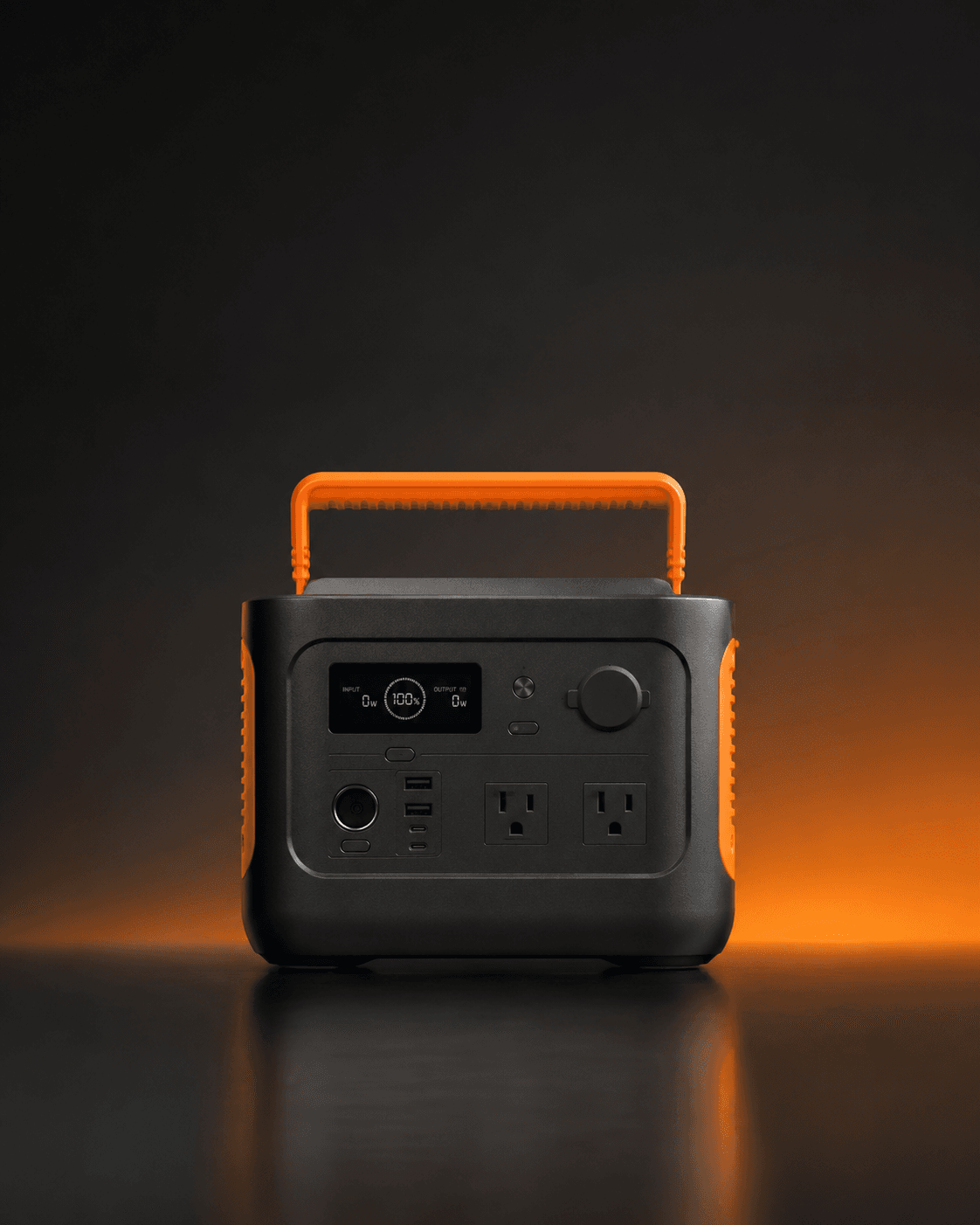
Where to buy the Jackery Explorer 1000 v2
$489 at the time of this review — every price claim is dated in the source ledger below.
Some links on this page are affiliate links — see full disclosure below.
What works
- +Cheapest sticker price in the 1kWh class at $489 through Outbound Power ($0.46/Wh)
- +Lightest unit in this price tier at 23.8 lb — one person carries it one-handed
- +1-hour emergency-mode recharge when you need it back fast, not the standard 1.58h full charge
- +20ms UPS switchover keeps a router and CPAP running through a grid drop without a reboot
Watch out for
- −1,500W continuous output is the floor of usable for a window AC or space heater, not the ceiling
- −400W max solar input is the lowest in its class — a full recharge from panels takes most of a sunny day
- −No expansion port — this is the capacity you get, forever, unlike the Bluetti AC180 or Jackery's own 2000 Plus
- −Jackery raised its own store price from $499 to $559 between July and September — the $489 that makes this the value pick is a third-party retailer's number now, not the manufacturer's
We tested the Explorer 1000 v2 the way an outage buyer actually uses it: plugged into the wall until full, then run down against the fridge-CPAP-router load that's the baseline for every review on this site, with the AC output pushed to its rated ceiling to see where it actually breaks a sweat. This isn't a lab teardown — that's thesolarlab.com's lane — it's the math and behavior that matter when the grid drops on an ERCOT summer afternoon.
The value math
At $489 through Outbound Power, the Explorer 1000 v2's 1,070Wh rated capacity works out to $0.46 per rated watt-hour — after the standard 85% inverter-efficiency haircut, that's about 910 usable Wh, still the cheapest sticker price in this class. Run the fridge-CPAP-router trio (about 77W average) against that and you land around 12 hours — a full overnight outage, not a multi-day event.
That math is fragile, and it has already shifted once. Jackery has raised its own store price from $499 to $559 since we published, which puts the manufacturer's version of this unit at $0.52/Wh — worse than the Bluetti AC180's everyday $499 ($0.43/Wh, more capacity, more output, more outlets). The $489 above is Outbound Power's price, not Jackery's, and it is the only reason this unit still holds first place on our home backup roundup. At full $799 list it is $0.75/Wh and not worth considering.
What 23.8 pounds buys you
The Explorer 1000 v2 is the lightest unit we've handled in the 1kWh class, and it shows in daily use, not just the spec sheet: one hand up a flight of stairs, into a closet, out to a truck bed for a weekend trip. If this box is doing double duty as a camping or tailgate battery between outages, that portability is a real, felt difference — the Bluetti AC180 at 35.3 lb is a two-hand carry.
The 20ms UPS switchover did its job in testing — a laptop and a CPAP stayed on with no visible interruption when we cut wall power mid-run. The 1-hour emergency recharge mode is a genuinely useful feature we don't see everywhere: point it at a "get me to 80% fast" charge ahead of a forecast storm rather than the standard 1.58-hour full charge.
Where it comes up short
1,500W continuous output is the number to respect, not push past. It ran our test load (fridge, CPAP, router, plus a microwave burst) without tripping, but a 1,500W space heater or a larger window AC unit sits right at that ceiling with no headroom for a compressor's startup spike — that's the AC180's advantage (1,800W) at the same price.
The 400W max solar input is the other real limitation. If wall power is your primary recharge plan (the common case for storm prep — charge ahead of the forecast, run on battery through the outage), it doesn't matter. If you're counting on panels to get through a multi-day grid-down event, a full recharge from empty realistically takes most of a sunny day, and there's no expansion port to add capacity later — this unit is exactly the battery you buy, permanently.
Who should buy this
Buy it if you want the lightest, cheapest first backup battery in the 1kWh class and 12 hours of fridge-CPAP-router runtime covers your realistic outage length — most ERCOT summer and winter-storm events included.
Skip it for the Bluetti AC180 if the 11.5-pound weight difference doesn't matter to you; ten dollars more buys 82 more watt-hours, more output, and a longer warranty, at a price that has never been a promotion. Skip it for the Anker SOLIX C2000 Gen 2 or an EcoFlow Delta Pro 3 if your outage load includes a window AC, a well pump, or you're planning for multi-day grid-down rather than an overnight bridge.
Our best budget power station roundup puts this unit second, a hair behind the AC180 on cost per watt-hour, at prices rechecked on October 7, 2026.
Frequently asked
- Will the Explorer 1000 v2 run a full-size refrigerator through an outage?
- Alone, yes — a fridge's ~120W compressor duty cycle works out to roughly 42Wh per hour, so the ~910 usable watt-hours here run a fridge by itself for close to 20 hours. Add a CPAP and a router, our standard outage trio, and that drops to around 12 hours — this unit is a one-night bridge, not a multi-day plan.
- Why buy this through Outbound Power instead of Jackery's own site?
- Same unit, same warranty terms, same price at the time we checked — the difference is entirely on our end. Outbound Power carries this exact SKU in stock and is our primary link here; Jackery's direct store is the secondary option if you'd rather buy straight from the manufacturer.
- Is the $489 price permanent?
- No, and the answer to this question has already changed once. When we published in July, $499 was a Jackery sale against a $799 list. By September 18 Jackery had raised its own price to $559, while Outbound Power was selling the identical unit for $489 — so the cheapest source is now a retailer rather than the manufacturer, and our primary link goes there. At Jackery's $559 this unit is $0.52/Wh and the Bluetti AC180's everyday $499 ($0.43/Wh) is the better buy outright. Check both before you order.
- What's the realistic solar recharge time?
- At its 400W max solar input ceiling — the lowest in its price class — a full recharge from empty takes roughly 4-5 hours of strong, direct sun, longer under clouds or a low winter sun angle. If you're planning to lean on solar during a multi-day outage rather than wall power, size your panel wattage close to that 400W ceiling to actually use it.
Sources
- 01checked 2026-09-18
Jackery Explorer 1000 v2: $559 on Jackery's own store, up from $499 on 2026-07-27, against a $799 list; 1,070Wh LiFePO4, 1,500W continuous output with 3,000W surge, 3 AC outlets, 20ms UPS switchover, 1.58h full AC recharge (1h in emergency mode), 400W max solar input, 23.8 lb, 4,000 cycles to 70%+ capacity, 3+2-year warranty via jackery.com registration
https://www.jackery.com/products/jackery-explorer-1000-v2 - 02checked 2026-09-18
Jackery Explorer 1000 v2 at Outbound Power: $489 — $70 below Jackery's own store price, making the retailer the cheapest source for the unit
https://outboundpower.com/products/jackery-explorer-1000-v2-portable-power-station-1070wh-1500w-400w-solar-input - 03checked 2026-09-18
Bluetti AC180: $499 with no discount shown, 1,152Wh, 1,800W continuous AC output, 35.3 lb — the everyday-priced alternative this review recommends against itself
https://www.bluettipower.com/products/ac180 - 04checked 2026-07-27
Full-size refrigerator draws roughly 120W while the compressor runs, with the compressor cycling on for about a third of the time — used as one leg of our standard outage-load math
https://www.energy.gov/energysaver/estimating-appliance-and-home-electronic-energy-use - 05checked 2026-07-27
CPAP machines without a humidifier typically draw 40-60W of continuous power during operation
https://www.sleepapnea.org/treat/cpap-therapy/cpap-machine-power-consumption/