Guide · Whole-house
Whole-House Battery Backup Without Solar: The Real Math
You don't need panels to back up a house with batteries. What whole-house actually requires, what it costs in 2026, and the tax-credit change stale guides miss.

Published July 21, 2026 · Updated September 30, 2026
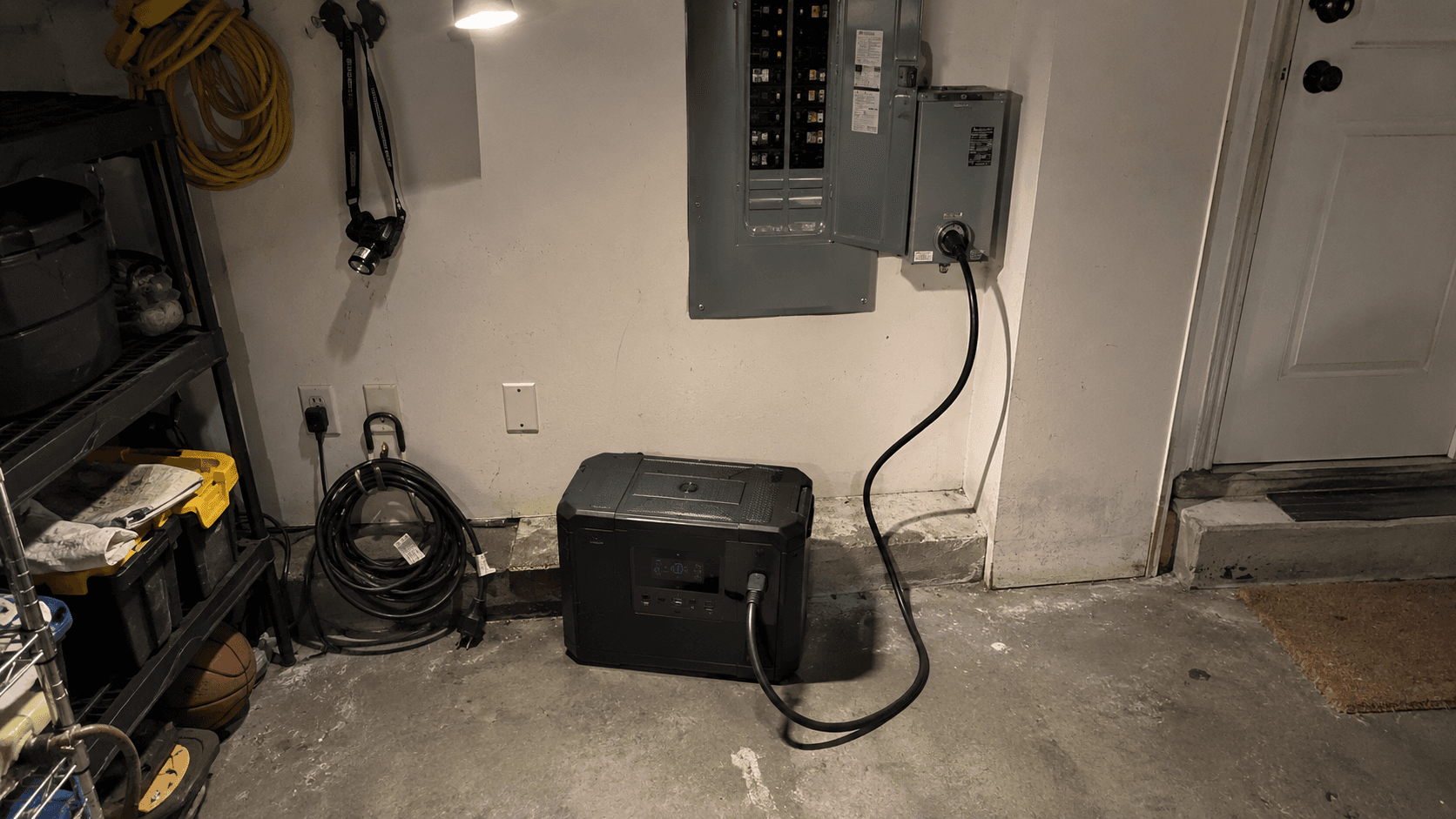
Most whole-house battery content assumes you're buying solar and backs into batteries from there. This page is for the other buyer: you want the house to stay on when ERCOT stumbles, you don't want panels (yet), and you want the 2026 numbers — including the one most guides haven't updated.
First, the correction: the 30% credit is over
For three years the whole-house battery pitch leaned on the federal Residential Clean Energy Credit — 30% back on any battery system of 3kWh or more, solar or not. Per the IRS's own page, that credit applies to property installed from 2022 through December 31, 2025. If you're installing in 2026, the discount pages are still promising doesn't exist. Run your math at sticker price; treat any remaining incentives as a state-by-state bonus to verify, not a 30% line item to assume.
What "whole-house" actually requires
Two things separate whole-house backup from a big power station and an extension cord: 240V output (well pumps, central HVAC blowers, and dryers live there) and a legal connection to your circuits. The connection comes in two grades:
The transfer-switch grade (~$314 + electrician). A 6-circuit manual transfer switch feeds your chosen essentials from any capable 240V source. Flip it during an outage, and the fridge, furnace blower, well pump, and lights run off the battery through the house's own wiring — no cords across doorways. (If the furnace is the load you care about most, our gas furnace guide covers the runtime math and the neutral-bonding quirk that stops some furnaces from lighting on battery.)
The smart-panel grade ($1,599 + install). EcoFlow's Smart Home Panel 2 backs twelve circuits with a 20ms automatic switchover and per-circuit control from an app — load-shedding the water heater while protecting the freezer, automatically. This is the battery equivalent of a standby generator's automatic transfer switch.
The 2026 no-solar builds
Essentials-plus, ~$3,100: an EcoFlow Delta Pro 3 ($2,799 today, up $400 since July) into the $314 transfer switch. 4,096Wh, 4,000W, real 240V — roughly 45 hours of the fridge-CPAP-router load, or a day of realistic multi-circuit essentials. Expandable to 12kWh later.
Automatic whole-home core, ~$4,400 before install: Delta Pro 3 plus Smart Home Panel 2. Same energy, but the switchover happens whether you're home or not, and circuit triage becomes software instead of discipline.
The budget expandable path, from $899.99: an Anker SOLIX C2000 Gen 2, with a BP2000 Gen 2 pack added later to reach 4kWh — the same capacity as the Delta Pro 3 above — without committing to panel-grade install work. It's 120V-only: fine for fridge/comms/window-unit backup, not for the well pump. (This slot used to be the Jackery Explorer 2000 Plus, which reached 12kWh; Jackery has discontinued it.)
For scale: Generac's own installed-cost figure for a gas standby system is $8,000–$16,000. The battery builds above land at a quarter to half of that — the trade is finite stored energy versus indefinite gas supply, which is exactly the fork our generator vs power station guide walks through.
Refilling without the sun
No panels means your refill strategies are the grid and the forecast. Pre-charge to 100% when weather is inbound (LiFePO4 packs tolerate sitting full through a storm watch just fine); after the outage, a Delta Pro 3 pulls itself back from the wall in under an hour of grid time between rolling blackouts. Some owners add a small dual-fuel generator as a day-three bulk charger — run outdoors, 20 feet from the house — which turns a fixed battery budget into a renewable one without touching the roof. Size the battery first though: the calculator tells you whether you're a 4kWh household or a 12kWh one before you spend a dollar on switching hardware.
What we'd buy for a no-solar build
The battery behind each build above. Switching hardware (the transfer switch or Smart Home Panel 2) is a separate purchase, usually with an electrician.
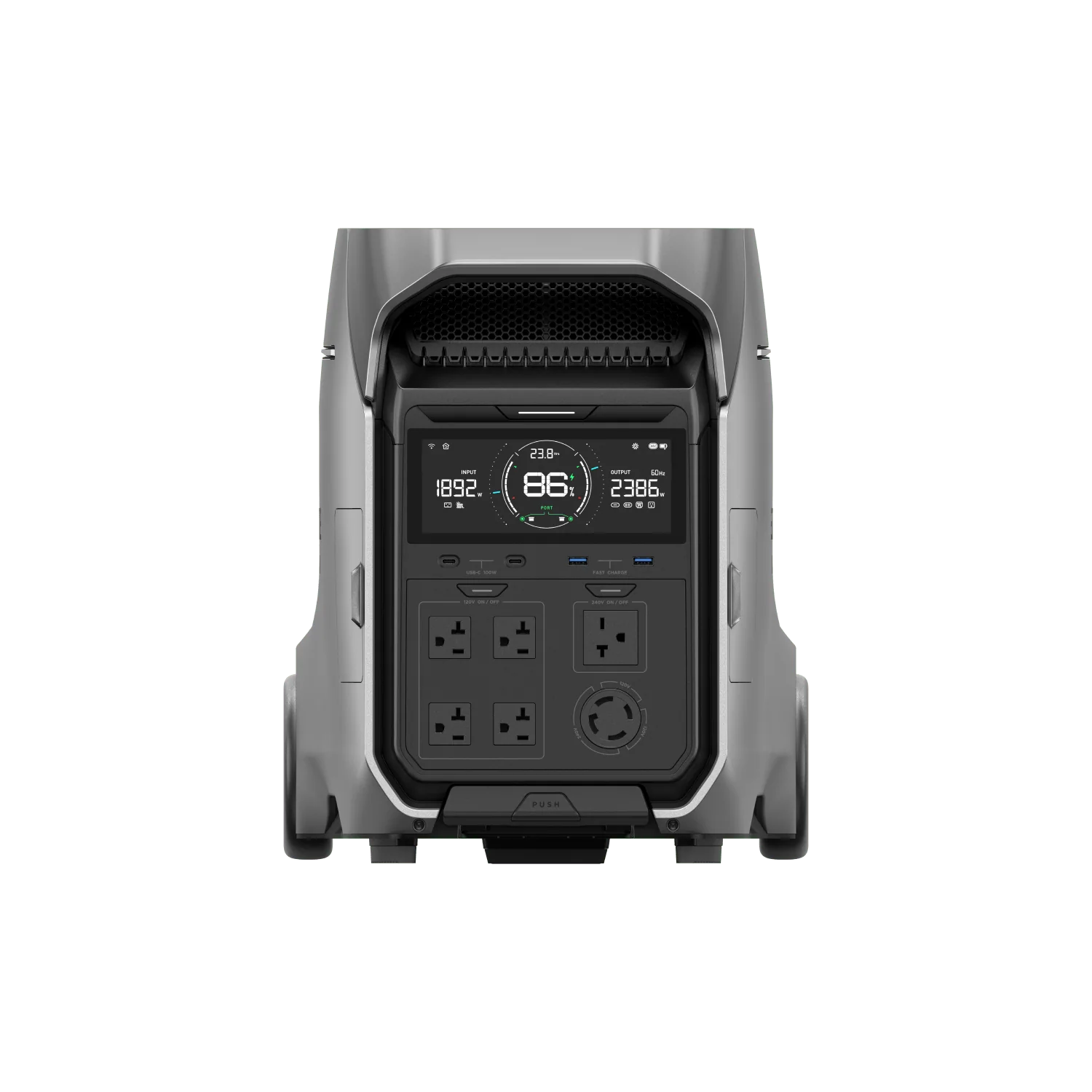
The battery in both of the builds above that reach real circuits: real 240V for a transfer switch, and expansion to 12kWh without replacing it.
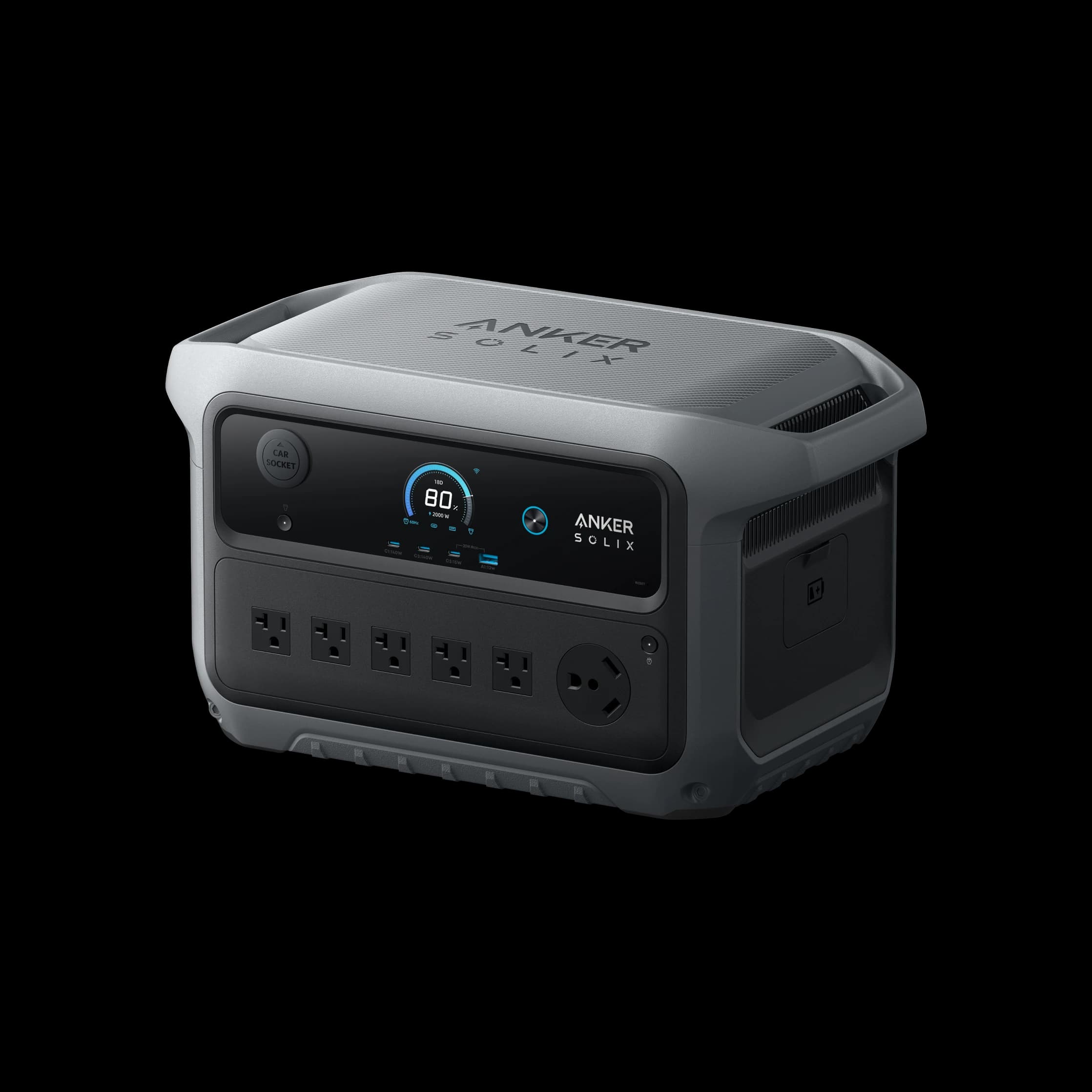
2kWh today and 4kWh with one expansion pack, for about a third of the Delta Pro 3's price to start. 120V only, so it's for fridge and comms circuits, not a 240V well pump.
Frequently asked
- Do I still get the 30% federal tax credit for a home battery?
- For new installations, no. The Residential Clean Energy Credit (Section 25D) paid 30% on qualifying battery storage of 3kWh or more — but per the IRS, it applies to property installed from 2022 through December 31, 2025. As of 2026 that window is closed for new installs; pages still advertising 30% off your battery are quoting expired law. Check the IRS page and your state's programs before assuming any subsidy.
- Can a battery system really run a whole house without solar?
- Yes — solar is a refill strategy, not a requirement. A grid-charged battery system covers outages exactly the same way; what you give up without panels is the ability to refill mid-outage. That's why no-solar designs emphasize pre-charging ahead of forecast weather and sizing for the outage you actually expect.
- What does whole-house actually mean in hardware?
- 240V output plus a legal way to feed your circuits: either a manual transfer switch (about $314 for a 6-circuit kit) covering chosen essentials, or a smart sub-panel like EcoFlow's Smart Home Panel 2 ($1,599, 12 circuits, 20ms switchover) for automatic per-circuit control. A power station feeding extension cords — whatever its wattage — is essentials backup, not whole-house.
- How many kWh does a house need per day?
- US households commonly consume 20–30kWh per day unrestricted — which is why true whole-everything battery backup gets expensive fast. The engineering answer is circuit triage: back up the fridge, well pump or blower, comms, and some lights, and a 12kWh expanded system covers days rather than hours.
Sources
- 01checked 2026-07-21
IRS: the Residential Clean Energy Credit equals 30% of the cost of new qualified clean energy property installed from 2022 through December 31, 2025; battery storage technology qualifies beginning in 2023 and must have a capacity of at least 3 kWh
https://www.irs.gov/credits-deductions/residential-clean-energy-credit - 02checked 2026-08-24
EcoFlow Delta Pro 3: $2,799 (list $3,699), 4,096Wh, 4,000W continuous 120/240V output, expandable to 12kWh single-unit, 10ms UPS switchover — price rechecked 2026-08-24, up from $2,399 on 2026-07-21
https://us.ecoflow.com/products/delta-pro-3-portable-power-station - 03checked 2026-07-21
EcoFlow Smart Home Panel 2: $1,599, 12-circuit smart sub-panel with 20ms auto switchover, per-circuit app control, expandable to 21.6kW output with stacked batteries
https://us.ecoflow.com/products/smart-home-panel-2 - 04checked 2026-07-21
Reliance Controls 31406CRK 6-circuit manual transfer switch kit (30A, generators to 7,500W): $313.79 at retail
https://www.toolboxsupply.com/products/reliance-controls-31406crk-pro-tran-6-circuit-transfer-switch-kit - 05checked 2026-07-21
Generac states home standby generator installation costs average $8,000–$16,000 including the generator
https://www.generac.com/resources/home-management/backup-generator-installation/ - 06checked 2026-09-18
Anker SOLIX C2000 Gen 2: $899.99, 2,048Wh LFP, 2,400W continuous AC via NEMA 5-20R and TT-30R (120V), expandable to 4kWh with a BP2000 Gen 2 pack
https://www.ankersolix.com/products/c2000-gen2 - 07checked 2026-09-18
Jackery has discontinued the bare Explorer 2000 Plus: its product page offers only refurbished kits, a panel bundle and the standalone battery pack
https://www.jackery.com/products/explorer-2000-plus-portable-power-station