Guide · Storm prep
The Texas Storm Power Prep Guide (ERCOT Edition)
A Texan engineer's power checklist for hurricane season and freeze events: what to do 72 hours out, day-of, mid-outage, and after — with ERCOT's own signals.

Published July 21, 2026 · Updated October 7, 2026
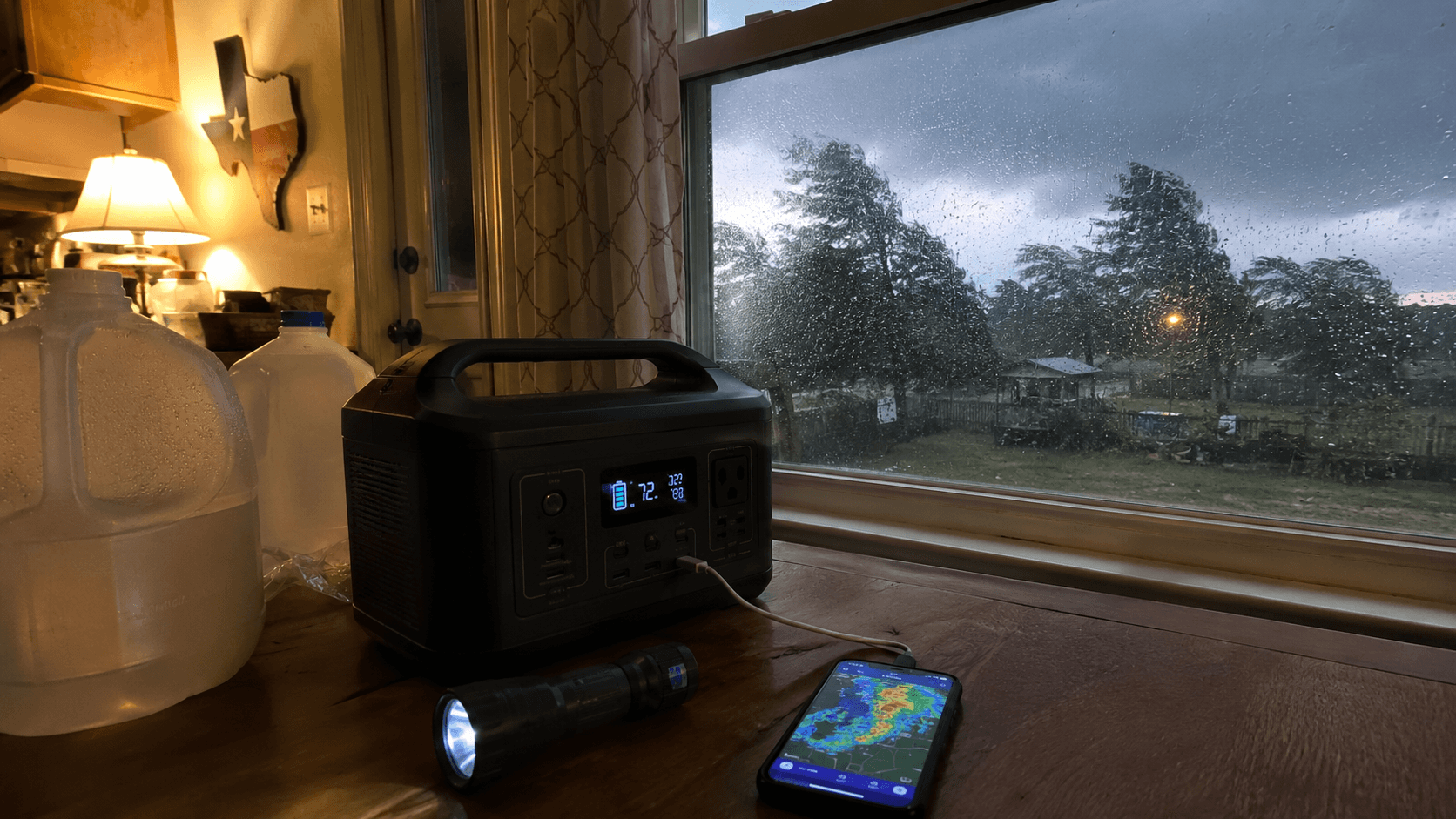
This is the page we update every time the Texas grid has a bad week — check the date next to the byline. It exists because the design case is real: in February 2021, more than 4.5 million Texas homes lost power in a freeze that killed at least 57 people and did about $195 billion in damage. Nobody who lived through that week plans for a two-hour outage anymore. Here is the power side of storm prep, sequenced the way events actually unfold.
Know the two seasons
Texas runs two outage seasons. Hurricane season officially spans June 1 to November 30, but NOAA's climatology is more useful than the official window: the peak is September 10, with most activity mid-August through mid-October. Freeze season is February — shorter, less predictable, and historically worse for the grid, because ERCOT demand peaks exactly when generation equipment is most likely to fail. If you buy backup capacity once a year, buy it in July, before the demand spike prices and ship times of September.
Read the grid's own signals
ERCOT tells you when to worry, publicly and in order of severity. Its real-time dashboards show supply, demand, and operating reserves with a six-day forecast — the same picture the control room narrates. A Conservation Appeal is the escalation that matters: ERCOT's formal request to cut usage because reserves are low enough that emergency operations are possible. It is voluntary, it is not a blackout warning — and it is your last comfortable window to top off every battery in the house.
T-minus 72 hours: the charge list
When the forecast turns (tropical system in the Gulf, arctic front on the six-day), run the list: every power station to 100% and left on the wall charger (LiFePO4 packs are fine living topped-off through a storm watch); phones, laptops, and battery banks full; the fridge and freezer to their coldest settings and packed with water bottles for thermal mass; the vehicle's tank filled — it's a 12V generator with seats. If your plan includes a gas generator, this is when fuel gets bought, not when the wind arrives: gasoline starts degrading within about 30 days, so storm-season fuel means stabilizer and rotation, not a forgotten can from last year.
During: spend watt-hours like money
An outage budget is the calculator math run in reverse — you know your usable watt-hours; ration them. The fridge stays closed (packed and cold, it holds safe temperatures for hours between compressor runs off the battery). The CPAP runs with the humidifier off. In a freeze, a gas furnace on a transfer switch is the most heat a battery can buy, but plan on hours of it, not days (the furnace math). Lights are LED lanterns, not ceiling fixtures on the inverter. And the line this site will never soften: combustion stays outdoors, twenty feet out, period — CPSC counts roughly 85 CO deaths a year from portable generators, mostly at home, mostly during exactly this scenario. The battery beside the bed is the safe machine; that's half the reason this site exists.
After: the debrief that fixes next time
Refill everything within 24 hours (rolling-blackout patterns mean the grid you have now may leave again). Then write down what actually ran out — hours of runtime, the appliance you wished you'd budgeted for, the cable you didn't own. That list is your next purchase, sized by evidence instead of adrenaline. If this event exposed a capacity gap, the ranked picks are sorted by exactly the math you just lived through.
What we'd buy for both Texas seasons
One battery to own first, one for freeze season, and one for a Uri-scale week.
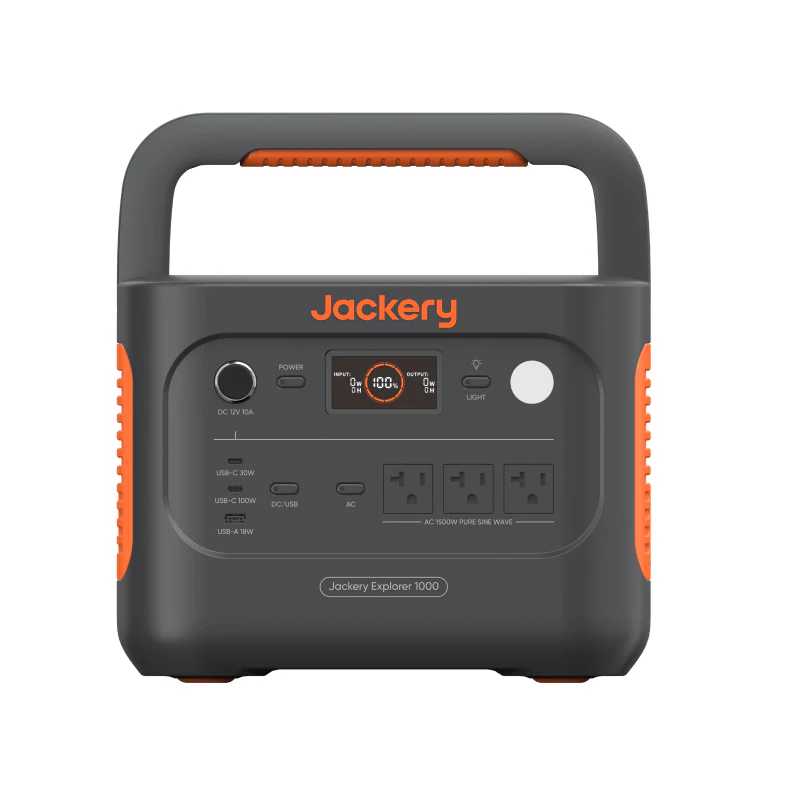
Our top home-backup pick: a night of fridge, CPAP and router, and light enough to carry room to room.
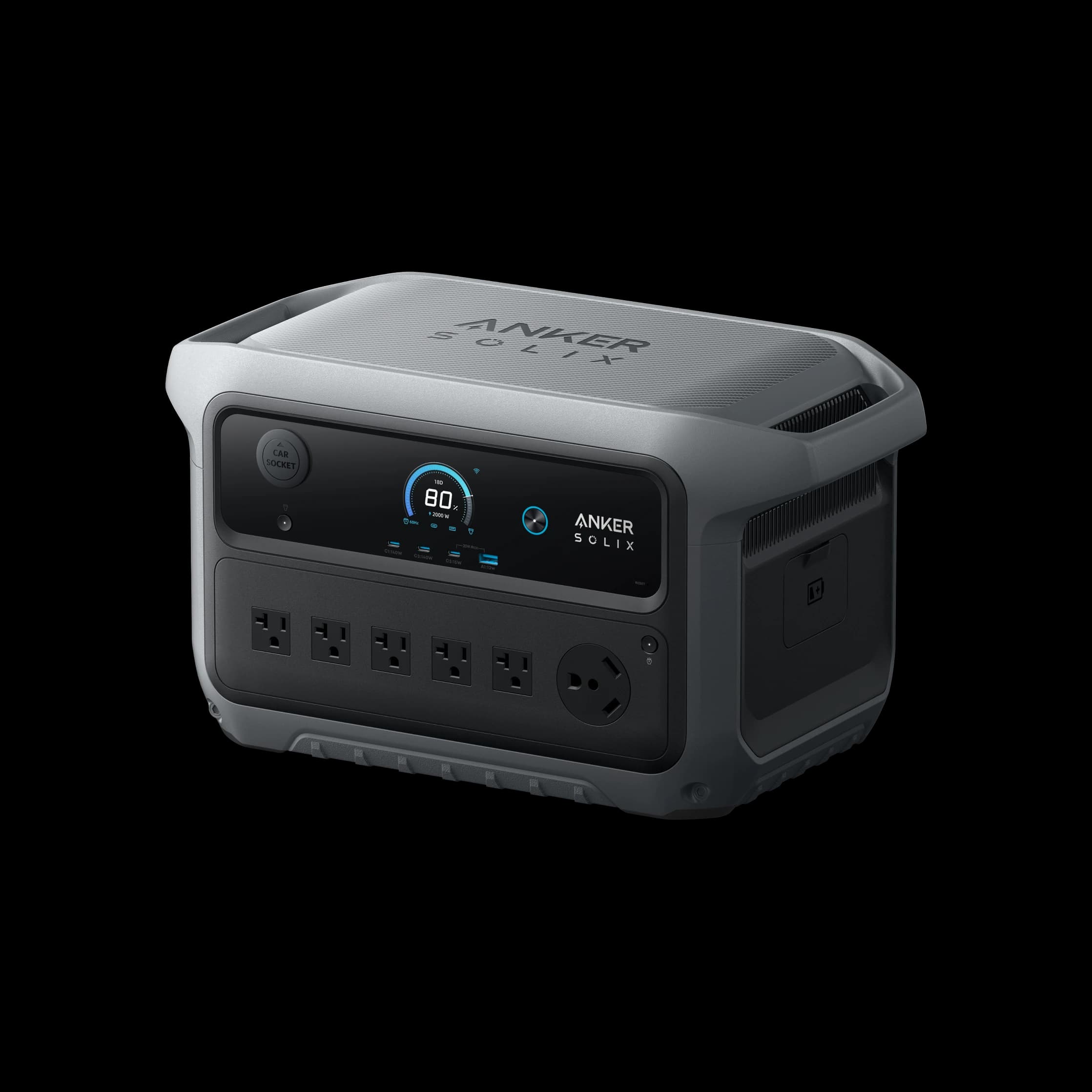
If February is the worry, start at 2kWh. On a furnace transfer switch it runs a gas furnace for an evening of real cold, or the essentials for most of a day. It's the cheapest 2kWh capacity we've reviewed, and a second pack doubles it.
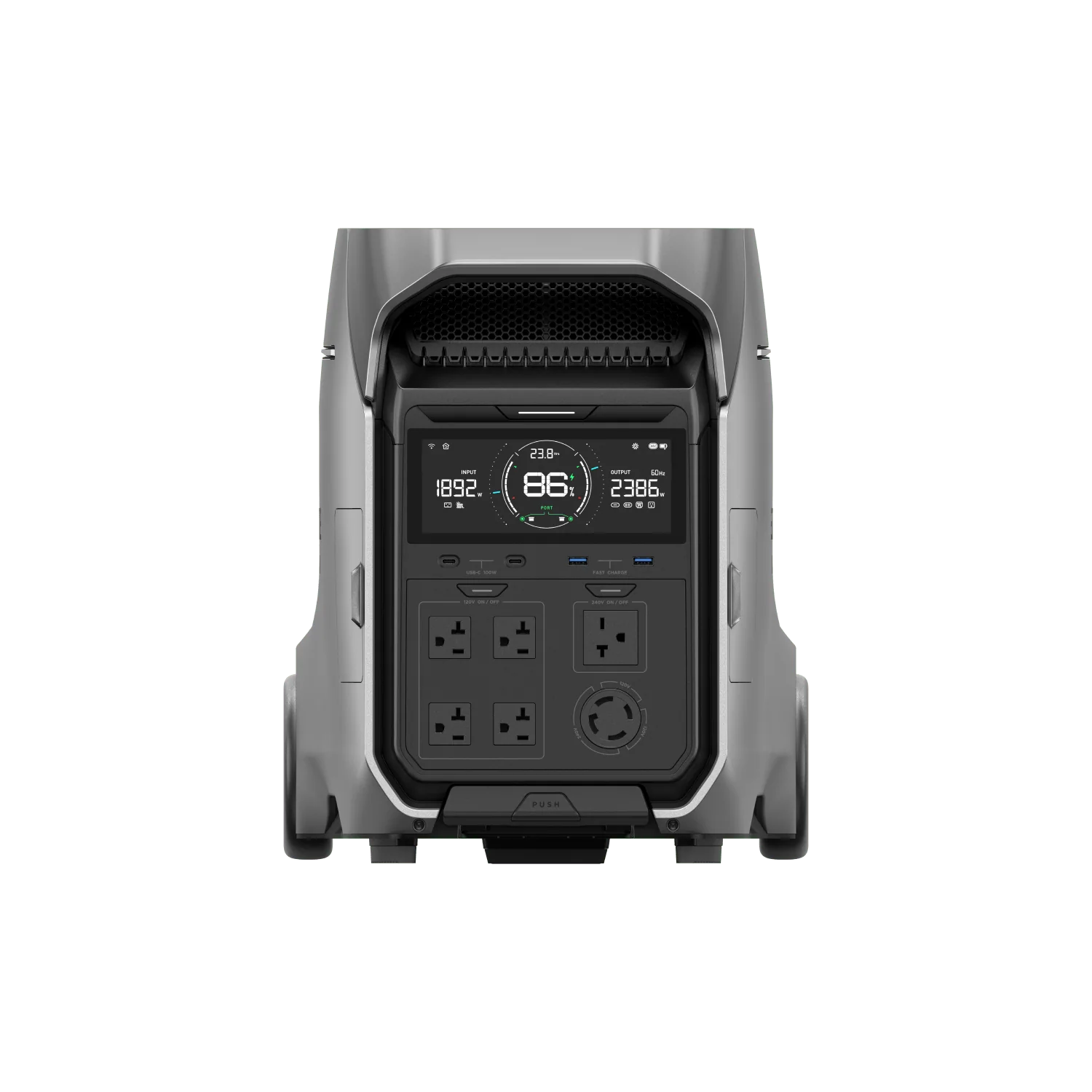
The Uri answer, as far as a battery goes: enough to keep a furnace running most of a cold night, and real 240V for a transfer switch.
Frequently asked
- What does an ERCOT Conservation Appeal actually mean?
- It's ERCOT's formal, voluntary request to reduce electricity use during a peak-demand crunch — issued, in their words, when the grid could enter emergency operations due to low reserves. It is not a blackout announcement, but it is the strongest public signal that one is possible; treat it as your final pre-charge window.
- When is hurricane risk highest for the Texas coast?
- The Atlantic season officially runs June 1 through November 30, and NOAA's climatology puts the peak at September 10, with most activity between mid-August and mid-October. Freeze risk is the other Texas season — the February 2021 event is the design case this guide plans around.
- How much backup power do I actually need for a storm?
- Size it with real math, not fear: a fridge, CPAP, and router average about 77W together, so a 1kWh-class station covers one night and a 2kWh unit covers a full day. Run your own load list through our calculator before buying anything — panic-buying capacity you can't use is how storm prep budgets die.
- Is it safe to run a generator during a freeze if it's in the garage?
- No — never indoors, never in a garage. CPSC attributes roughly 85 deaths a year to portable-generator carbon monoxide, mostly at home during weather outages. Outside only, at least 20 feet from the house, exhaust pointed away. A battery power station is the only backup that's safe beside your bed.
Sources
- 01checked 2026-07-21
The February 2021 Texas blackout (Winter Storm Uri) cut power to more than 4.5 million homes and was associated with at least 57 deaths across 25 Texas counties and over $195 billion in property damage
https://energy.utexas.edu/research/ercot-blackout-2021 - 02checked 2026-07-21
NOAA National Hurricane Center climatology: the Atlantic hurricane season runs June 1 to November 30, peaking September 10, with most activity mid-August through mid-October
https://www.nhc.noaa.gov/climo/ - 03checked 2026-07-21
ERCOT: a Conservation Appeal is an elevated, voluntary request for Texans to reduce energy use during peak demand periods when the grid could enter emergency operations due to lower reserves
https://www.ercot.com/conservation - 04checked 2026-07-21
ERCOT publishes real-time grid conditions — supply and demand, operating reserves, and a 6-day forecast — on its public dashboards
https://www.ercot.com/gridmktinfo/dashboards - 05checked 2026-07-21
CPSC estimates about 85 US consumers die each year from CO poisoning caused by gasoline-powered portable generators, with 81% of generator deaths occurring in residential locations; operate outside only, at least 20 feet from the house
https://www.cpsc.gov/Newsroom/News-Releases/2022/CPSC-Releases-New-Report-on-Carbon-Monoxide-CO-Fatalities-Urges-Generator-Safety-in-New-PSA - 06checked 2026-07-21
Gold Eagle (STA-BIL): gasoline begins to break down in as little as 30 days; stabilizer protects stored fuel for up to 24 months
https://www.goldeagle.com/tips-tools/keep-fuel-sta-bilized/ - 07checked 2026-09-18
Jackery Explorer 1000 v2: 1,070Wh LiFePO4, 1,500W continuous output, 20ms UPS switchover, 23.8 lb
https://www.jackery.com/products/jackery-explorer-1000-v2 - 08checked 2026-10-07
Anker SOLIX C2000 Gen 2: $849.99 on Anker's store on 2026-10-07 during a dated sale, $899.99 on 2026-09-18; 2,048Wh LFP, 2,400W continuous AC with 4,000W peak, expandable to 4kWh with a BP2000 Gen 2 pack
https://www.ankersolix.com/products/c2000-gen2 - 09checked 2026-08-24
EcoFlow Delta Pro 3: 4,096Wh LFP battery, 4,000W continuous AC output at 120V/240V, expandable to 12kWh
https://us.ecoflow.com/products/delta-pro-3-portable-power-station