Guide · Hurricane prep
The Hurricane Power Prep Guide (Gulf Coast Edition)
A multi-day outage checklist for Gulf Coast hurricane season: pre-storm charging, mid-outage rationing, and the week Beryl left Houston without power.

Published July 31, 2026 · Updated August 24, 2026
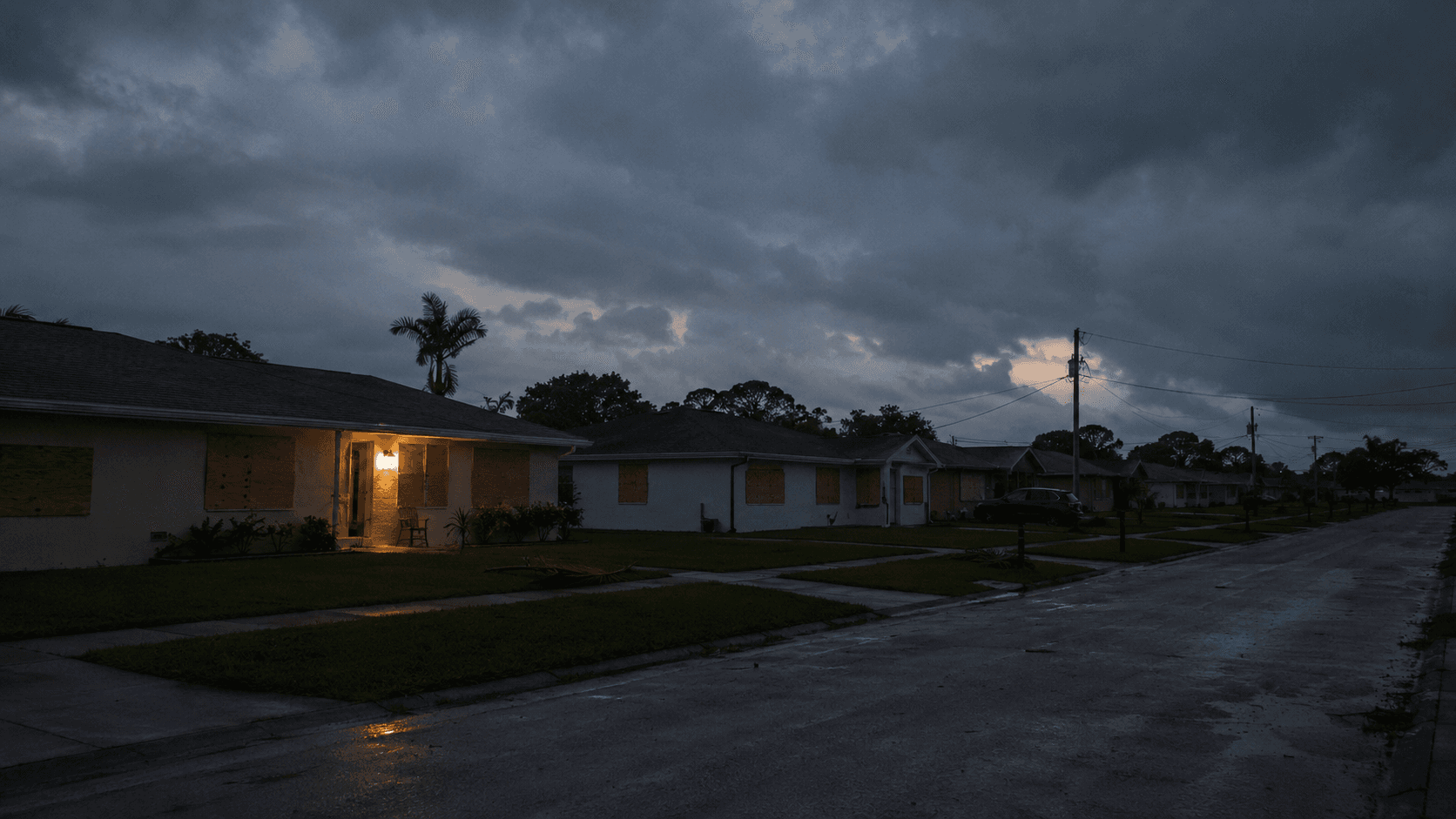
This is the companion to our Texas storm prep guide, which covers both of Texas's outage seasons. This page is narrower on purpose: it's the hurricane-specific plan, sized for the outage hurricanes actually cause — not an overnight blip, but days, sometimes more than a week, of no grid at all. The design case is Hurricane Beryl: a storm that weakened to a tropical storm before it even made landfall near Houston on July 8, 2024, and still left nearly 3 million people without power, with tens of thousands still dark more than a week later. A "minor" hurricane produced a major outage — that gap between storm category and outage length is what this guide plans around.
Size for a week, not a night
The single biggest mistake in hurricane power prep is sizing backup for the storm's landfall day instead of the outage that follows it. Beryl's own numbers make the case: roughly 226,000 CenterPoint Energy customers were still without power eight days after landfall, and some restorations ran past July 19 — eleven days out. If your plan tops off one battery and calls it done, you're prepared for the wind, not the outage. Multi-day capacity, a plan to recharge from a car or generator once the battery runs down, and a realistic accounting of what actually needs power for a week (not everything) are the three pieces an overnight-outage plan is missing.
The charge-everything trigger
Don't wait for a hurricane warning. NOAA's own climatology shows the Atlantic season's real center of mass is mid-August through mid-October, peaking around September 10 — but Gulf systems have organized and struck fast outside that window too, sometimes with only a few days' notice between formation and landfall. The moment a system enters the Gulf with your area in the forecast cone, that's the trigger: every power station to 100%, phones and battery banks topped off, the fridge and freezer set to their coldest and packed for thermal mass, the car's tank filled. Waiting for landfall to be certain is waiting for the shipping delays, sold-out shelves, and gas-station lines that show up in the same 72 hours everyone else has the same idea.
During: the 4-hour fridge clock is real
The CDC's numbers are blunt: a closed refrigerator holds a safe temperature for about 4 hours without power, a full freezer for about 48. That's not a suggestion to plan around loosely — it's the actual clock a multi-day hurricane outage puts you on, and it's exactly why this site treats fridge backup as a baseline load, not a luxury. If your battery capacity covers the fridge continuously through the outage, you've beaten that clock entirely instead of racing it — our ranked picks for running a refrigerator size that one load against this exact 4-hour/48-hour clock. Beyond the fridge: CPAP with the humidifier off, lights on LED lanterns instead of ceiling fixtures, and — the rule that doesn't bend — any combustion generator runs outside only, at least 20 feet from the house, exhaust pointed away, and elevated above whatever storm surge or street flooding the forecast mentions. CPSC counts roughly 85 CO deaths a year from portable generators, and a flooded yard during a hurricane is precisely the scenario that turns "ventilated enough" into a fatal miscalculation. A battery station has no exhaust and nothing that flooding disables.
After: recharge before the next system
Hurricane season doesn't stop after one storm passes — refill every battery within the first day power is back, because the same Gulf that produced this system can produce another one before it ends November 30. If Beryl-scale duration exposed a real capacity gap — you ran out before the grid came back, or you were rationing watts you needed for something that mattered — that's the evidence for your next purchase, not a guess. The ranked picks are sorted by exactly that kind of real-world capacity math, and if the load that broke your plan was something a small unit can't run at all — a window AC, a well pump — whole-house-adjacent capacity is the next page to read.
Frequently asked
- How long does a hurricane actually knock the power out for?
- Longer than the storm itself. Hurricane Beryl made landfall near Houston on July 8, 2024 and knocked out power to nearly 3 million people — eight days later, roughly 226,000 CenterPoint Energy customers were still dark, with some restorations not landing until July 19. Size your backup plan for a week, not a night.
- When should I start charging everything?
- As soon as a system enters the Gulf and a forecast cone includes your area — not when the outer bands arrive. NOAA's hurricane climatology puts the Atlantic season's peak at September 10, with most activity mid-August through mid-October, but named storms have hit the Gulf coast outside that window too. Treat a tropical storm watch, not a hurricane warning, as your charge-everything trigger.
- How long is food safe in the fridge and freezer without power?
- The CDC's guidance: a closed refrigerator holds a safe temperature for about 4 hours. A full freezer holds for roughly 48 hours (24 if half full), as long as the door stays shut. That timeline is exactly why this site sizes fridge backup in hours, not days — a battery covering the CDC's 4-hour window is doing real work even before you touch anything else.
- Is a gas generator or a battery station safer for a hurricane's flooding and wind?
- A battery station, without qualification. CPSC attributes roughly 85 US deaths a year to portable-generator carbon monoxide poisoning, the large majority at home during exactly this kind of weather event — and a flooded yard or a garage run with the door cracked for ventilation are both common hurricane-specific failure modes. A battery station has no exhaust and no fuel to keep dry; if you're running a combustion generator anyway, outside only, 20 feet from the house, exhaust pointed away, elevated above expected surge.
Sources
- 01checked 2026-07-31
Hurricane Beryl made landfall near Houston, Texas on July 8, 2024, cutting power to nearly 3 million people; roughly 226,000 CenterPoint Energy customers remained without power eight days later, with some restorations not completed until July 19
https://www.texastribune.org/2024/07/15/texans-power-outages-hurricane-beryl/ - 02checked 2026-07-31
NOAA National Hurricane Center climatology: the Atlantic hurricane season runs June 1 to November 30, peaking September 10, with most activity mid-August through mid-October
https://www.nhc.noaa.gov/climo/ - 03checked 2026-07-31
CDC: a closed refrigerator keeps food safely cold for about 4 hours during a power outage; a full freezer holds a safe temperature for about 48 hours (24 hours if half full)
https://www.cdc.gov/food-safety/foods/keep-food-safe-after-emergency.html - 04checked 2026-07-31
Ready.gov hurricane preparedness guidance: build an emergency kit before hurricane season, know your evacuation zone, and prepare for the possibility of extended power outages
https://www.ready.gov/hurricanes - 05checked 2026-07-31
CPSC estimates about 85 US consumers die each year from CO poisoning caused by gasoline-powered portable generators, with 81% of generator deaths occurring in residential locations; operate outside only, at least 20 feet from the house
https://www.cpsc.gov/Newsroom/News-Releases/2022/CPSC-Releases-New-Report-on-Carbon-Monoxide-CO-Fatalities-Urges-Generator-Safety-in-New-PSA