Roundup · Home backup power
Best Power Station for a Refrigerator: 6 Ranked
Six power stations ranked by hours of fridge runtime per dollar — with the startup-surge math spec sheets skip, against dated, sourced prices.

Published August 24, 2026 · Updated October 7, 2026
- Editor's Choice1
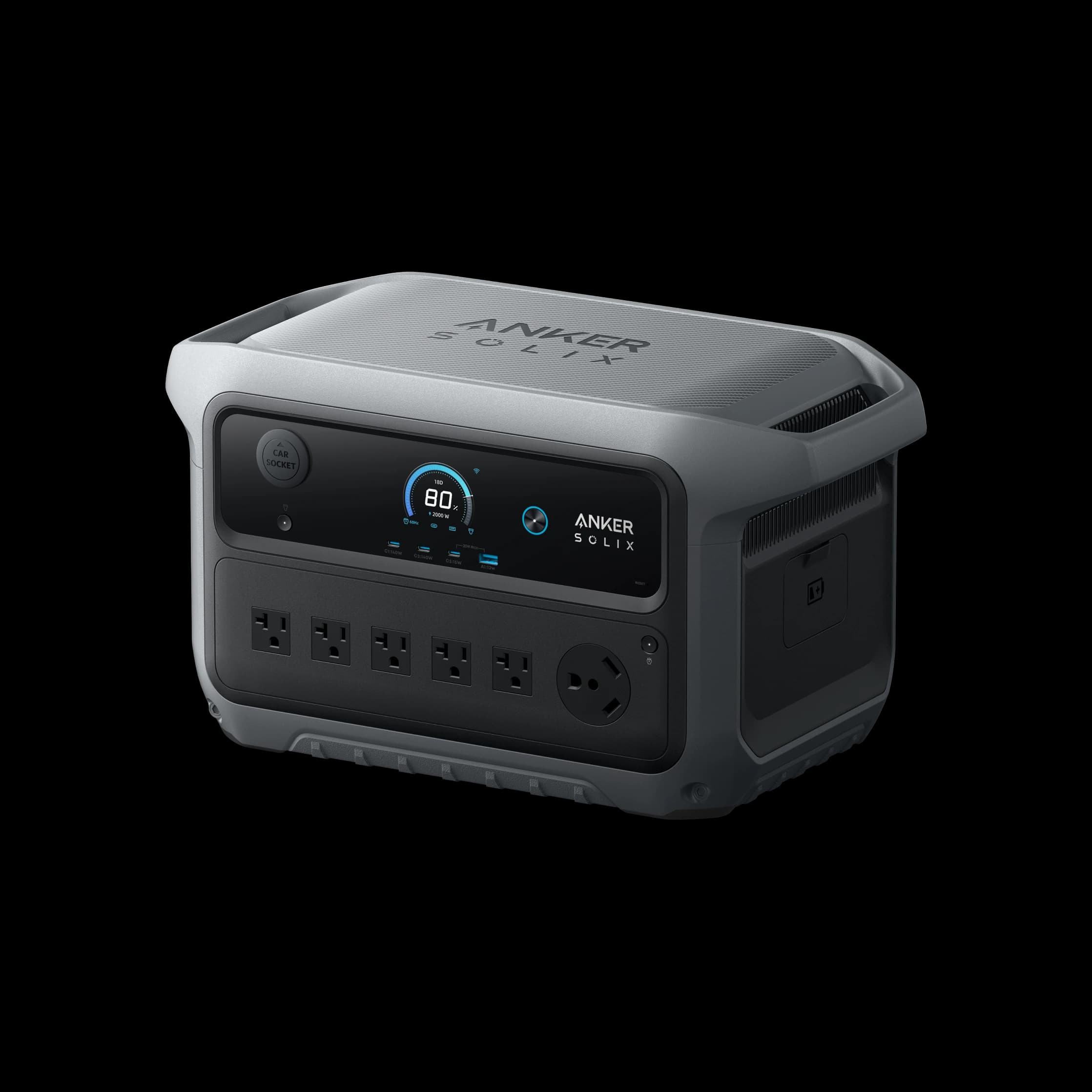
The cheapest way to clear a full day with margin. 2,048Wh works out to roughly 41 hours of fridge-only runtime, through two nights and most of the CDC's 48-hour full-freezer window, at $21.71 per fridge-hour. That's within 31 cents of the cheapest fridge-hour on this page. 2,400W continuous with a 4,000W peak swallows any compressor inrush, and a second pack takes it to 4kWh, room for a chest freezer later. Anker had it at $849.99 ($20.51 per fridge-hour) in an October 6-7 sale. It took the top slot from the Bluetti Elite 200 v2 when Bluetti put that unit back to $1,199.
- 2
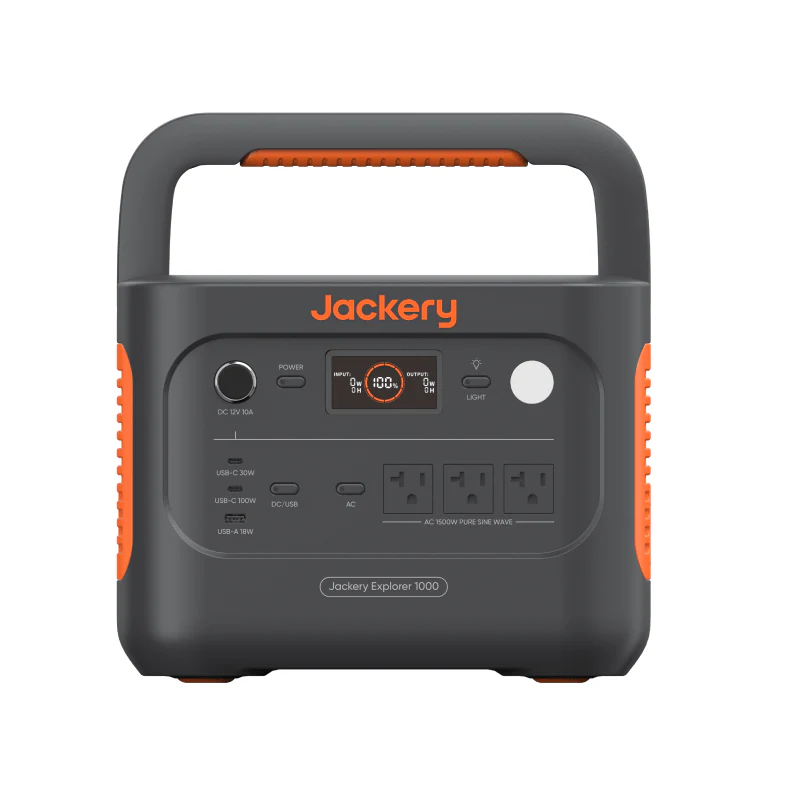
The cheapest honest overnight. At $489 through Outbound Power — seventy dollars under Jackery's own store, which has raised this unit to $559 — its ~910 usable watt-hours run a fridge alone for about 21 hours at $22.58 per fridge-hour. It is one night, not two, and at 23.8 lb it is the one unit here you can carry one-handed up a flight of stairs.
- 3
 Bluetti AC1804.5/5
The most fridge-hours under $500 at a price that is not a sale. 1,152Wh gets you about 23 hours at $21.40 per fridge-hour, the cheapest on this page, and unlike every discount here, $499 is Bluetti's everyday number, so this math does not evaporate when a promo window closes. B-series packs can push it to 4,224Wh later if one night stops being enough.
Check price at BluettiCode AFF5% — 5% off home backup at BluettiAmazon - 4
 Bluetti Elite 200 v24.5/5
The longest fridge runtime under $2,000, at a price that's back where it started. 2,073.6Wh gives about 42 hours on a fridge, an hour more than the Anker above, and 2,600W continuous. But Bluetti ended its $849 promotion and the unit is $1,199 again. That's $28.57 per fridge-hour, the second-worst value here. Amazon had it at $798.99 on October 7 ($19.04 per fridge-hour). At that price it would top this list again, so check both stores.
Check price at BluettiCode AFF5% — 5% off home backup at BluettiAmazon - 5
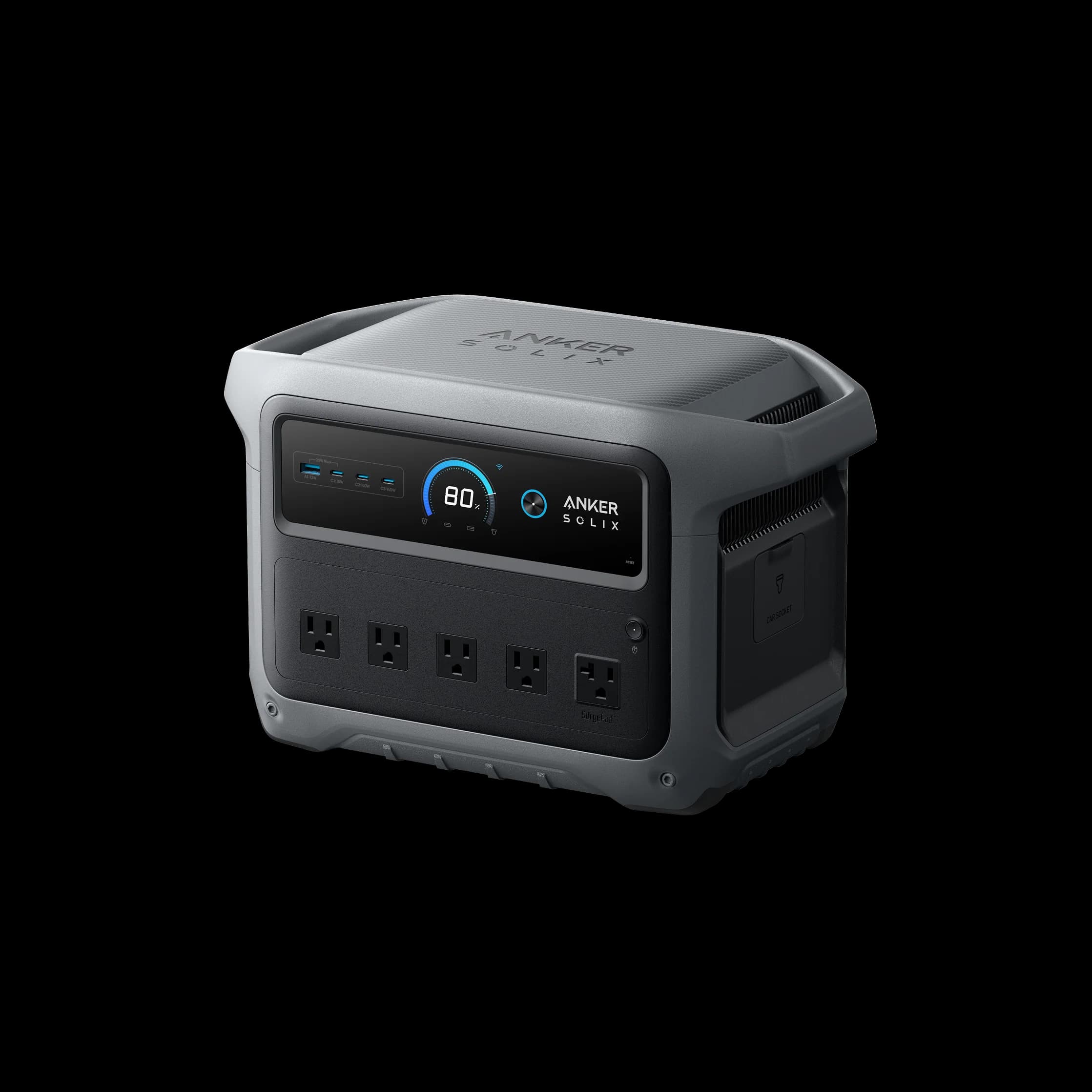
The refill pick, $50 cheaper than in August. About 20 hours on a fridge is the shortest run here and $24.13 per fridge-hour is still the worst of the sub-$500 picks, but it recharges to full in 49 minutes — so if you have a car, a generator, or intermittent grid power, it buys back a full day of fridge time in under an hour, which no other unit here can do.
- 6
 EcoFlow Delta Pro 34.5/5
The whole-kitchen tier: 4,096Wh is about 83 hours on a fridge, or a fridge and a chest freezer together for a day and a half, with 4,000W and true 240V for whatever else is on the circuit. At $33.77 per fridge-hour it is the worst value on this page — you are paying for capacity and 240V, not efficiency.
A refrigerator is the load almost everyone backs up first, and it is also the load most buying guides size wrong — because they quote a fridge's running watts and stop there. Two numbers actually decide this purchase: the surge your compressor demands the instant it kicks on, and the watt-hours it eats over the days the grid is down. This page ranks six power stations on both, using prices checked on the manufacturers' and retailers' own stores on September 18, 2026. The Bluetti Elite 200 v2, whose price has since jumped, was rechecked on October 7.
The ranked math, in one table
The load here is a single full-size refrigerator: about 120W while the compressor runs, running roughly a third of the time, which averages 42Wh per hour. Usable Wh applies the same 85% inverter haircut we use everywhere on this site — spec sheets quote the battery, you live off the inverter.
| Unit | Price today | Rated / usable Wh | Fridge-only runtime | $ / fridge-hour | Continuous AC |
|---|---|---|---|---|---|
| Anker SOLIX C2000 Gen 2 | $899.99 (list $999.99) | 2,048 / ~1,740 | ~41 h | $21.71 | 2,400W |
| Jackery Explorer 1000 v2 | $489 (Jackery: $559) | 1,070 / ~910 | ~21 h | $22.58 | 1,500W |
| Bluetti AC180 | $499 | 1,152 / ~980 | ~23 h | $21.40 | 1,800W |
| Bluetti Elite 200 v2 | $1,199 (Amazon Oct 7: $798.99) | 2,073.6 / ~1,760 | ~42 h | $28.57 | 2,600W |
| Anker SOLIX C1000 Gen 2 | $499.99 (list $529.99) | 1,024 / ~870 | ~20 h | $24.13 | 2,000W |
| EcoFlow Delta Pro 3 | $2,799 (list $3,699) | 4,096 / ~3,480 | ~83 h | $33.77 | 4,000W (240V) |
Runtime figures are computed from manufacturer capacity specs and typical appliance draws — estimates, deliberately conservative, with the formula on our methodology page so you can rerun any of them against your own fridge.
Surge first: the number that decides whether it starts at all
A compressor draws several times its running wattage for the fraction of a second it spins up. Howell-Oregon Electric Cooperative's sizing chart puts a refrigerator/freezer at 500 running watts and 750 startup watts, a frost-free 24 cu. ft. freezer at 720 running and 1,890 startup, and — counterintuitively — a small refrigerator at 2,000 startup watts. Those are conservative numbers built for older equipment, but they set the floor.
Every unit on this page clears that floor comfortably: the smallest continuous rating here is the Explorer 1000 v2's 1,500W, with a 3,000W surge ceiling. So surge is not what separates these six.
Surge is what separates them from the thing many people buy by mistake:
A 300W solar generator will not run your fridge
The same phrase — solar generator — is used for 2kWh battery stations and for 300W panel kits sold for phone charging. Battery capacity is irrelevant if the inverter cannot deliver the startup surge: a 300W unit will trip the instant the compressor engages, at any state of charge. If a listing does not publish a continuous AC rating in watts, that is the specification it is hiding.
The Power Lifting footnote
Both Bluetti units advertise a number above their continuous rating — 2,700W on the AC180, 3,900W on the Elite 200 v2 — labeled Power Lifting mode. Read Bluetti's own spec line carefully: it applies to pure resistive loads. A space heater or a kettle qualifies. A refrigerator's compressor is an inductive motor and does not.
That is not a strike against either unit. Both clear a fridge's inrush on their honest continuous ratings alone (1,800W and 2,600W). But if you were mentally sizing a Bluetti against a compressor using the Power Lifting figure, use the smaller number instead — and the same caution applies to EcoFlow's X-Boost, which works by reducing voltage to the load rather than by delivering more power.
Anker's 4,000W peak on the C2000 Gen 2 is a different kind of number: it is a genuine inverter surge rating rather than a resistive-load mode, and independent bench testing actually measured short bursts above it, up to 6,000W. That is the direction you want a spec to be wrong in.
Where the CDC clock changes the answer
This ranking keeps changing with prices. In August a $899 unit sat above a $449 one on the strength of the food-safety window, even though the cheap one won on price per hour. In September the Elite 200 v2 fell to $849 and became both the longest runtime here and the cheapest fridge-hour. By October 7 Bluetti had put it back to $1,199, and the top slot went to the Anker SOLIX C2000 Gen 2. That's 41 hours instead of 42, at $21.71 per fridge-hour against the Elite's $28.57.
The window is why a 2kWh unit stays on top, even though the AC180 has a slightly cheaper fridge-hour. The CDC's guidance is that a refrigerator held closed keeps food safe for about 4 hours, a full freezer for about 48 hours, and a half-full freezer for about 24.
Line that up against the runtime column. A 1kWh unit gets a fridge through one night and part of the next morning. A 2kWh unit gets it through two nights and still has margin at the far end of the freezer's 48-hour window — the difference between riding out a typical multi-day outage and making a decision about a full freezer on day two. If your outages are the four-hour kind, the Explorer 1000 v2 at $489 is genuinely all you need, and our budget roundup ranks it against the other sub-$500 units at October prices. If you are on the Gulf Coast in September, size for the second night.
Cycling the fridge, and why it stretches everything above
Nothing on this page has to run continuously. Because a closed fridge coasts for hours, you can pull it down to temperature, unplug it, and let it drift — then repeat. In practice that roughly halves the watt-hours a fridge costs you per day, which turns the 21-hour column into most of two days and the 42-hour column into most of four.
Two honest caveats. It takes discipline and an appliance thermometer, not guesswork: the CDC's line is that perishable food held above 40°F for two hours or more should be discarded, and a coasting fridge gives you no alarm when it crosses that. And it only works if the door stays shut — every opening restarts the clock. Our hurricane power prep guide has the full mid-outage rationing sequence this fits into.
If your fridge is older than about 15 years
Every number on this page assumes a modern unit averaging 42Wh per hour. A pre-2010 refrigerator can draw two to three times that, and the utility charts quoting 500 running watts are describing exactly that generation of appliance. If yours is that old, halve every runtime figure in the table and size up a tier — or run the numbers against your own nameplate in our wattage calculator guide, which takes the actual draw off your appliance instead of an average off ours.
Frequently asked
- What size power station do I need to run a refrigerator?
- For one full night, about 1,000Wh. A full-size refrigerator draws roughly 120W while the compressor runs and the compressor runs about a third of the time, which averages near 42Wh per hour — so a 1kWh unit with ~910 usable watt-hours lasts about 21 hours. For a full day with margin, or to protect a freezer through the CDC's 48-hour window, step up to the 2kWh class.
- Will a power station handle my fridge's startup surge?
- Every unit on this page will. Utility sizing charts put refrigerator startup surge between roughly 750W and 2,000W depending on the unit's age and size, and the smallest continuous rating here is 1,500W with a 3,000W surge ceiling. The units that fail this test are the 300W to 600W solar-panel kits also marketed as solar generators — those cannot start a compressor at all, regardless of their battery size.
- How long will food stay safe without any power at all?
- The CDC's numbers: a refrigerator held closed keeps food safe for about 4 hours, a full freezer for about 48 hours, and a half-full freezer for about 24. That 4-hour figure is why a fridge is the first thing most people back up — and why cycling the fridge on and off a battery, rather than running it continuously, works.
- Is it cheaper to run a fridge on a generator instead?
- Per watt-hour, yes, and it is not close — but a refrigerator is the single worst case for a gas generator. It is a small, intermittent load you need for days, which means running a combustion engine nearly continuously for a 42Wh-per-hour draw, refueling it, and keeping it 20 feet from the house the whole time. The batteries here are silent, have no exhaust, and can live in a closet.
Sources
- 01checked 2026-10-07
Bluetti Elite 200 v2 on Bluetti's store: US$1,199.00 against a US$1,999.00 compare-at price, up from $849 on 2026-09-18; on Amazon (ASIN B0DCJV9LTB) $798.99, shown as 33% off a $1,199.00 list
https://www.bluettipower.com/products/bluetti-elite-200-v2-portable-power-station - 02checked 2026-10-07
Anker SOLIX C2000 Gen 2 on Anker's store: $849.99 under a 'Fall Prime Deals' banner dated Oct. 6th - Oct. 7th
https://www.ankersolix.com/products/c2000-gen2 - 03checked 2026-09-18
Bluetti Elite 200 v2: $849 against a $1,199 list on 2026-09-18, down from $899 on 2026-08-24; 2,073.6Wh, 2,600W continuous AC output, 3,900W Power Lifting mode for pure resistive loads, 53.4 lb
https://www.bluettipower.com/products/bluetti-elite-200-v2-portable-power-station - 04checked 2026-09-18
Bluetti AC180: US$499.00 with no discount shown, 1,152Wh, 1,800W total continuous AC output across 4 x 120V/15A outlets, 2,700W Power Lifting mode, 35.3 lb
https://www.bluettipower.com/products/ac180 - 05checked 2026-09-18
Jackery Explorer 1000 v2 at Outbound Power: $489.00, up from $449.00 on 2026-08-24, against Jackery's own store price of $559.00; 1,070Wh (30.4Ah/35.2V DC), 1,500W continuous with 3,000W surge
https://outboundpower.com/products/jackery-explorer-1000-v2-portable-power-station-1070wh-1500w-400w-solar-input - 06checked 2026-09-18
Jackery has discontinued the bare Explorer 2000 Plus — its own product page offers only refurbished kits, a panel bundle and the standalone battery pack, and points buyers to the HomePower 2000 Plus v2 — and Outbound Power no longer carries it either
https://www.jackery.com/products/explorer-2000-plus-portable-power-station - 07checked 2026-09-18
Anker SOLIX C2000 Gen 2: $899.99 against a $999.99 list, 2,048Wh LFP, 2,400W continuous with 4,000W peak, 4,000 cycles to 80%, 41.7 lb, TT-30R socket, expandable to 4kWh, 9W advertised standby draw, dual-door fridge backup claimed at up to 32 hours
https://www.ankersolix.com/products/c2000-gen2 - 08checked 2026-09-18
Anker SOLIX C1000 Gen 2 manufacturer specs: $499.99 against a $529.99 list, down from $549.99 on 2026-07-21; 1,024Wh, 2,000W max continuous AC, 3,000W peak output, 100% recharge in 49 minutes via UltraFast Charging at 1,600W AC input, 24.9 lb
https://www.ankersolix.com/products/c1000-gen2 - 09checked 2026-09-18
EcoFlow Delta Pro 3: $2,799 against a $3,699 list price ($900 off), 4,096Wh base capacity expandable to 48kWh, 4,000W maximum continuous output, X-Boost to 6,000W
https://us.ecoflow.com/products/delta-pro-3-portable-power-station - 10checked 2026-08-24
Howell-Oregon Electric Cooperative generator sizing chart: refrigerator/freezer listed at 500 running watts and 750 startup watts; frost-free 24 cu. ft. freezer at 720 running and 1,890 startup; small refrigerator at 500 running and 2,000 startup
https://www.hoecoop.org/generatorsizing - 11checked 2026-08-10
Full-size refrigerator draws roughly 120W while the compressor runs, with the compressor cycling on for about a third of the time — used as one leg of our standard outage-load math
https://www.energy.gov/energysaver/estimating-appliance-and-home-electronic-energy-use - 12checked 2026-07-31
CDC: a closed refrigerator keeps food safely cold for about 4 hours during a power outage; a full freezer holds a safe temperature for about 48 hours (24 hours if half full)
https://www.cdc.gov/food-safety/foods/keep-food-safe-after-emergency.html